


The Smallest Giant

How Guyana Became the Only Country on Earth That Can Feed Itself
eyesonguyana
Population: under a million. Land mostly untouched forest. GDP long overshadowed by sugar, gold, and now oil. And yet, according to a landmark 2025 study in the journal Nature Food, Guyana has quietly pulled off something no other nation on the planet has managed: it produces enough of every essential food group to feed its own people without importing a single calorie from abroad.
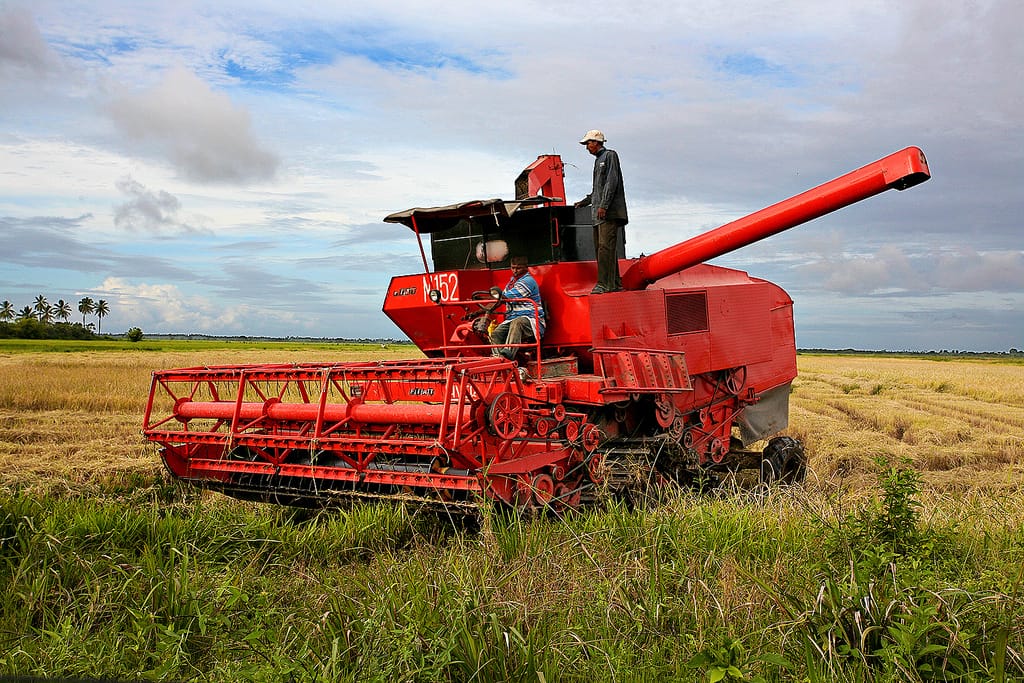
Out of 186 countries analyzed by researchers from the University of Göttingen and the University of Edinburgh, only one — Guyana — hit full self-sufficiency across all seven food categories the study tracked: fruits, vegetables, dairy, fish, meat, plant-based proteins, and starchy staples. China and Vietnam, agricultural giants with populations over a billion and 100 million respectively, came closest, covering six out of seven. The United States didn’t. Neither did France, Brazil, or India. Just Guyana went seven for seven.
So does the Instagram claim hold up?
Mostly, yes — with one important asterisk. “Food self-sufficient” in the study means Guyana grows, raises, or catches enough to meet its population’s nutritional needs across the major food groups. It doesn’t mean the country never touches an import label. Guyanese supermarket shelves still carry imported coffee, baby formula, olive oil, and wine — things the local climate and industry simply aren’t built to produce at scale. Guyana isn’t sealed off from world trade; it still exports and imports goods regionally and globally. What the study measured is something more specific and, frankly, more impressive: the capacity to survive and eat well on homegrown food alone if it ever had to.
Why Guyana, of all places?
The answer is a mix of geography and geology working in the country’s favor. Guyana sits just one to nine degrees north of the equator, giving it warm temperatures and heavy rainfall year-round. Its coastal plain — where most of the population lives — is layered with fertile clay soil deposited over millennia by sediment from the Amazon river system. Add in the Essequibo, the country’s massive river system, and you get land that’s almost absurdly good at growing rice, cassava, plantains, vegetables, and supporting fisheries and livestock.
Related Posts:






What makes it more remarkable is what Guyana didn’t have to sacrifice to get there. Much of South America has expanded farmland by clearing rainforest — but Guyana has preserved more than 85% of its original forest cover while still achieving food security. Agricultural researchers point to this as proof that self-sufficiency doesn’t have to come at the cost of ecological destruction, if a country works with its landscape instead of flattening it.
The push behind the numbers
This didn’t happen by accident. Guyana has positioned itself as the lead player in CARICOM’s “Vision 25 by 2025” initiative, a Caribbean-wide push to cut the region’s food import bill by a quarter. Since 2020, the Guyanese government has poured money into agriculture, with budgetary allocations reportedly up by roughly 468%. Some of where that money went:
- Rice, the country’s agricultural backbone, with hundreds of thousands of seed bags produced annually to keep exports and domestic supply flowing.
- The Broiler Breeder Project, which distributed hundreds of thousands of hatching eggs and supported thousands of poultry farmers.
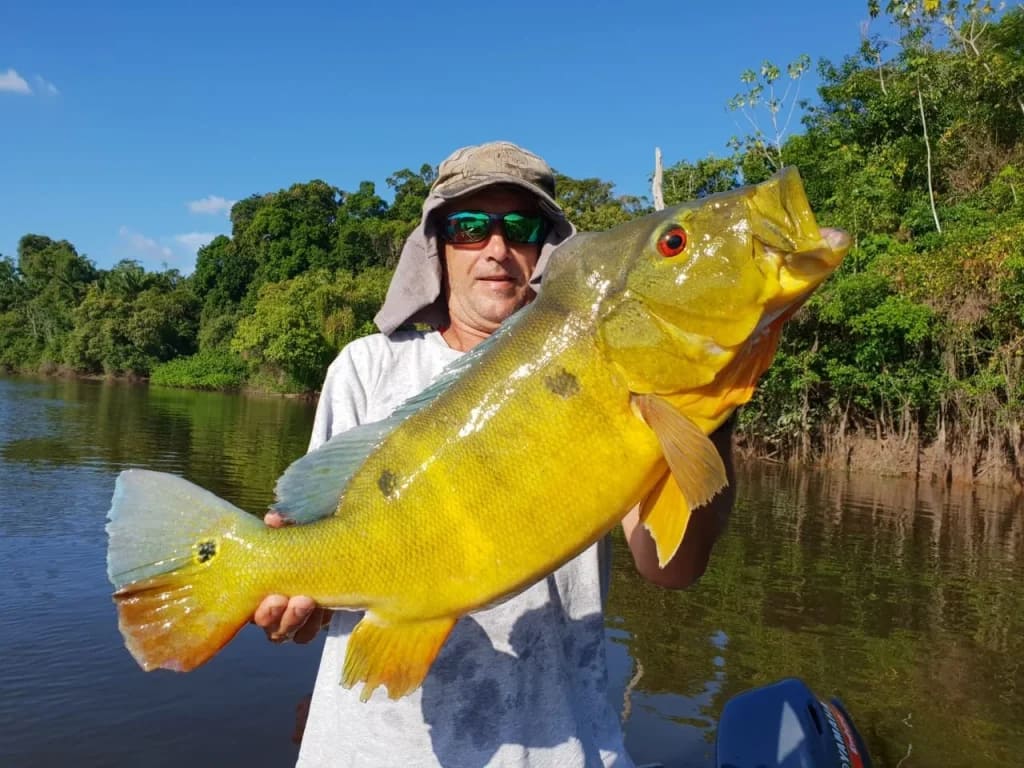
- Aquaculture stations and upgraded fish landing sites across multiple regions.
- A beekeeping (apiculture) expansion, with hives distributed to over a thousand new beekeepers.
- A youth-focused Agriculture Innovation and Entrepreneurship Programme, funding shade houses for growing vegetables like carrots, cauliflower, and broccoli.
It’s a case study in diversification: rather than betting everything on one export crop, Guyana spread investment across grains, livestock, fish, and even niche products like honey.
An uncomfortable irony
Here’s the twist that makes Guyana’s story land differently than a simple feel-good headline: this is also the country currently experiencing one of the fastest oil-fueled economic booms on the planet, after massive offshore discoveries starting in 2015. It would have been easy — and historically, this is exactly what resource-rich small nations tend to do — for Guyana to let oil revenue crowd out everything else and lean harder into imports as money flowed in. Instead, agriculture investment surged alongside the oil boom, not in spite of it.
Should every country try to copy this?
Food policy researchers are quick to inject some caution here. Tim Lang, an emeritus food policy professor at City St George’s, University of London, has pointed out that historically, national self-sufficiency movements — autarky — haven’t had a great track record, often accompanying authoritarian or isolationist politics. The consensus among the researchers isn’t “close your borders and grow everything yourself.” It’s closer to: know what your land is actually good at, invest in that, and don’t put all your food security in one foreign basket.
Guyana isn’t a template every country can lift and drop into place — it has a tiny population, unusually fertile land, low population density, and forest cover most nations gave up decades ago. But the underlying lesson travels well: matching agricultural strategy to what a place is naturally suited for, rather than importing someone else’s model wholesale, produces resilience that shows up exactly when global supply chains get shaky — as they did during COVID-19 and the Russia-Ukraine war’s fertilizer and fuel shocks.
The bigger picture
Zoom out and Guyana’s achievement looks even rarer. The same study found that only one in seven countries worldwide manage self-sufficiency in five or more food groups. Fewer than a quarter of countries grow enough vegetables to meet their own population’s needs. Six countries — including Afghanistan, Iraq, and Yemen — didn’t hit self-sufficiency in a single food category.
Against that backdrop, a small South American nation quietly out-farming the world’s agricultural superpowers isn’t just a fun Instagram fact. It’s a genuine outlier in a global food system that mostly runs on interdependence — and a reminder that resilience sometimes comes from playing to your own strengths rather than chasing everyone else’s playbook.
Sources: Stehl et al., “Food self-sufficiency across countries,” Nature Food (2025); BBC Science Focus; ScienceAlert; Vice; The Voice; Stabroek News; The St Kitts Nevis Observer; The Caribbean Camera.