


A New Tiger in the Andes

What Colombia’s Rightward Turn Means for Guyana
eyesonguyana
On June 21, Colombians did something the country hasn’t done in generations: they handed the presidency to a hard-right outsider by the narrowest of margins. Abelardo de la Espriella — a criminal defense lawyer turned political phenomenon who calls himself “El Tigre” and was openly endorsed by Donald Trump — edged out leftist senator Iván Cepeda by less than half a percentage point, ending eight years of leftist dominance under Gustavo Petro and his Pacto Histórico movement. De la Espriella takes office on August 7 promising an iron-fist approach to crime, expanded oil exploration, lower taxes, and a much closer embrace of Washington.
It’s a genuine inflection point for Colombia. But its ripple effects don’t stop at the border. Eight hundred kilometers southeast, in Georgetown, Guyanese officials are almost certainly watching closely — because the kind of Colombia that’s emerging looks a lot more like a partner than a problem.
Why Guyana cares about who governs in Bogotá
Guyana’s foreign policy over the past decade has been built around a single, existential priority: defending its sovereignty over Essequibo, the resource-rich region that makes up roughly two-thirds of the country’s territory and is now the heart of its booming offshore oil industry. Venezuela has claimed that territory for more than a century, and the dispute reached a genuine boiling point between 2023 and 2025, with Venezuelan naval incursions, a referendum to annex the region, and warships from both the US and Russia drifting into the picture.
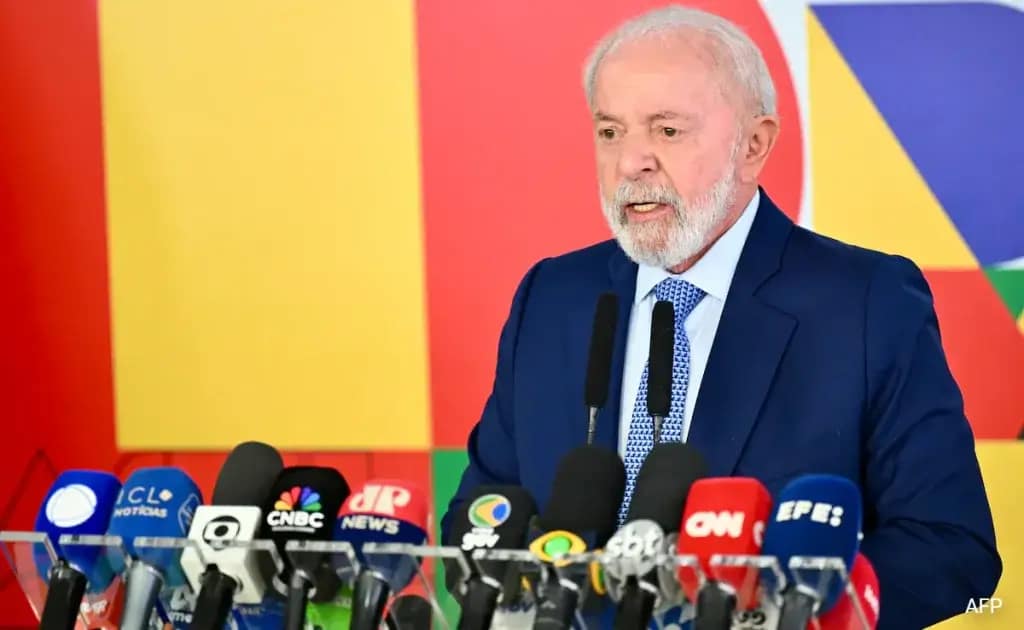
That backdrop has made Guyana acutely sensitive to where its neighbors stand. Brazil’s Lula has signaled he won’t tolerate Venezuelan military action near Guyana. The Caribbean Community has rallied behind Georgetown diplomatically. And Colombia — sharing a long, porous border with both Venezuela and Guyana’s broader neighborhood, and historically a key voice in regional diplomacy — has its own stake in how the Essequibo dispute resolves.
Related Posts:




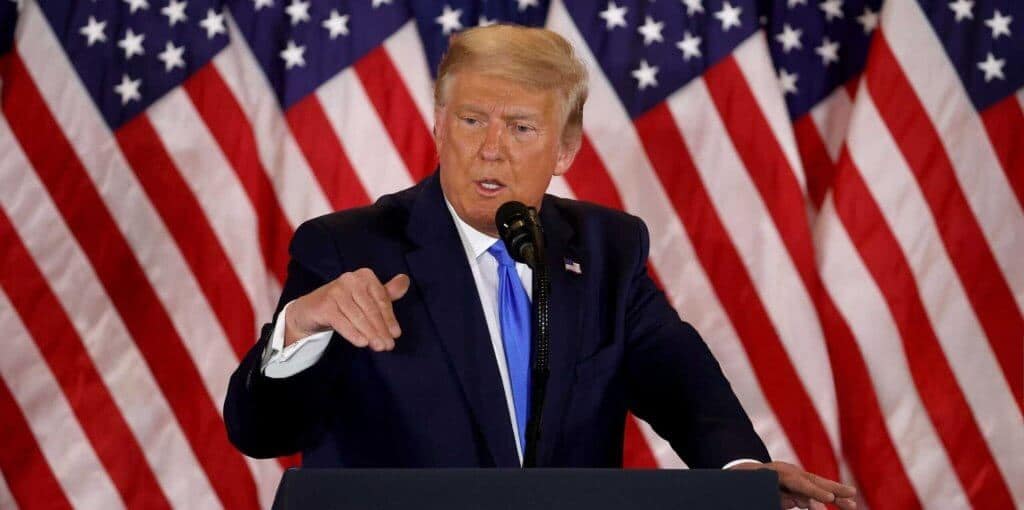
A Colombian government led by someone explicitly aligned with the Trump administration’s approach to Venezuela changes that calculus considerably. De la Espriella has pledged to confront organized crime with the kind of mega-prison, security-first model associated with El Salvador’s Nayib Bukele, and to deepen security cooperation with Washington — a sharp break from Petro, who feuded publicly with Trump and had his US visa revoked over disputes about counternarcotics policy. For Guyana, a Colombia that’s back in Washington’s good graces, rather than at odds with it, is a Colombia far more likely to align with the US-backed status quo on Essequibo than to entertain ambiguity that could give Caracas room to maneuver.
A reshuffled neighborhood
The regional picture Guyana is operating in has also just been scrambled in a much bigger way. In January 2026, a US military operation captured Venezuelan strongman Nicolás Maduro and flew him to New York to face narcoterrorism charges, installing his former vice president, Delcy Rodríguez, as interim leader. Rodríguez has struck a notably conciliatory tone toward Washington since then — opening Venezuela’s oil and mining sectors to outside investment and seeing US sanctions against her personally lifted in exchange. Whether or not Venezuela’s claim to Essequibo survives this transition intact is one of the most consequential open questions in South America right now; Rodríguez’s government has so far insisted it won’t accept an unfavorable ICJ ruling, even as it courts the same Western capital that backs Guyana’s position.
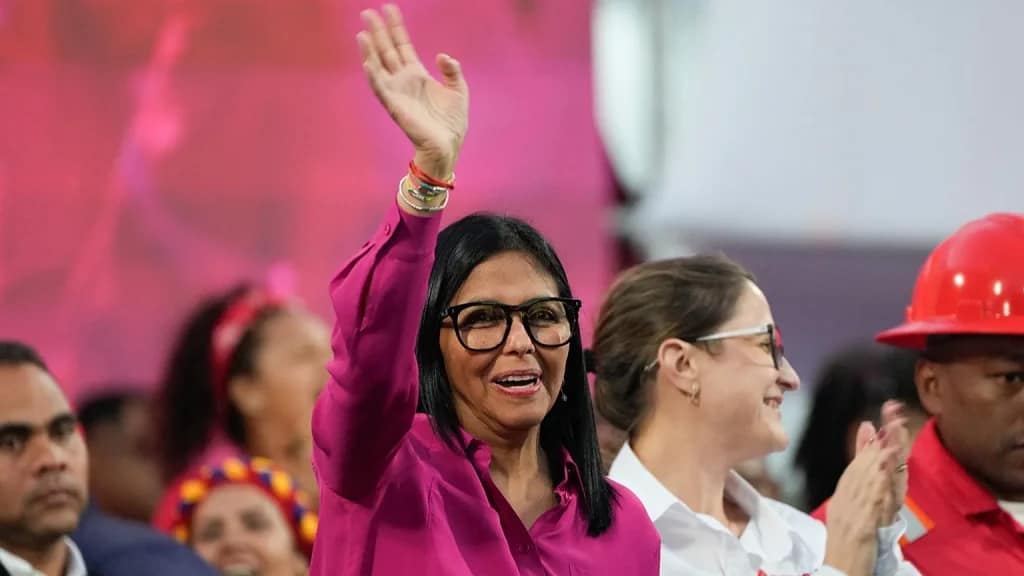
This is the environment a new, US-aligned government in Bogotá steps into: a Venezuela in flux and newly eager for American investment, a Guyana more economically and strategically important than ever thanks to ExxonMobil’s discoveries, and a Washington more directly involved in South American affairs than it has been in decades. For Guyana, the opportunity is to consolidate a wider coalition — Brazil, the US, the UK, France, and now potentially a far friendlier Colombia — that treats Essequibo as settled and Guyana’s oil frontier as worth protecting.
What’s actually on the table for Guyana
Concretely, a few openings stand out:
Security cooperation. De la Espriella’s campaign centered on hard-line, US-backed security policy. A Colombia willing to coordinate more closely with Washington on regional security — particularly around organized crime and the Venezuelan border — indirectly reinforces the security architecture protecting Guyana’s offshore facilities, even without any direct Colombia-Guyana defense pact.
Energy and investment diplomacy. De la Espriella has promised to expand Colombian oil exploration and pursue economic liberalization, a notable reversal from Petro’s anti-fossil-fuel stance. That doesn’t make Colombia and Guyana rivals — Colombia’s reserves and offshore basins are different fields entirely — but it does mean Bogotá is far more likely to be a sympathetic voice for resource-driven growth in regional forums than a Petro government that treated oil expansion as a moral hazard.
A friendlier diplomatic chorus. Petro had cast doubt on Colombia’s own election results and feuded loudly with Trump; a government in Bogotá speaking the same broad language as Washington, Buenos Aires, and Brasília reduces the odds of Colombia becoming a sympathetic ear for Caracas’s territorial claims, however that dispute ultimately resolves at the ICJ.
None of this guarantees a formal alliance — Colombia and Guyana don’t share a border, and Bogotá’s attention is overwhelmingly consumed by its own security crisis and an outgoing leftist movement that still controls Congress. But the broad direction of travel matters. A South America where the loudest Petro-style skepticism of US influence is replaced by leaders eager to court Washington is, on balance, a more comfortable one for a small, oil-rich country whose entire security strategy rests on American backing.
A wider tilt: Latin America’s experiment with the right
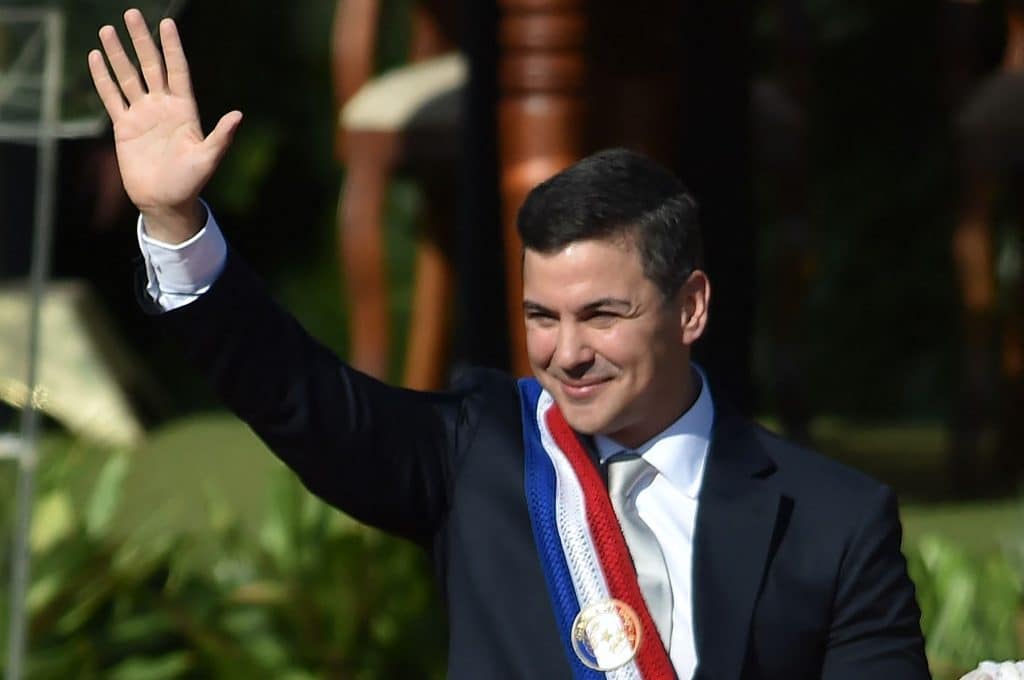
Colombia’s vote doesn’t happen in isolation — it’s the latest entry in a trend that’s reshaped the region’s politics since the early 2020s. Argentina’s Javier Milei took a basket-case economy with triple-digit inflation and, through brutal austerity, brought monthly inflation down from double digits to a fraction of that, while opening the economy to trade and investment in ways that drew international praise even as poverty spiked along the way. Ecuador’s Daniel Noboa has leaned into security crackdowns and closer US ties, recently going so far as to publicly back De la Espriella’s campaign against Petro’s government. Paraguay’s Santiago Peña has kept one of the region’s most stable, market-friendly economies humming with minimal drama. And Bolivia’s Rodrigo Paz, elected in late 2025, has tried to drag the country out of a fuel and currency crisis inherited from years of MAS-party mismanagement, scrapping decades-old subsidies and reopening ties with the US and the IMF.
It’s worth resisting the temptation to call this an unqualified success story, though. Milei’s gains have come with real social pain. Paz’s reforms have triggered weeks of strikes, roadblocks, and a declared state of emergency, with his own ministers resigning amid the unrest. The pattern across the region isn’t simply “conservative leaders win and economies boom” — it’s closer to a generation of voters, exhausted by inflation, crime, and the failures of an earlier left turn, betting on market discipline and security crackdowns, and discovering that the bill for fixing decades of dysfunction comes due quickly and painfully.
Still, the direction is unmistakable. From Buenos Aires to Bogotá to a post-Maduro Caracas courting Wall Street, the hemisphere’s center of gravity has shifted toward governments that want closer ties with Washington, friendlier terms for investors, and harder lines on crime — even when the public reaction at home is far messier than the headlines suggest. For Guyana, threading the needle of its existential border dispute, that shift looks less like a single new alliance and more like a friendlier overall climate: a region increasingly inclined to see its oil-rich, internationally backed neighbor as the side worth standing behind.