


The Giant in the Crosshairs

How the Shield of the Americas, a Washington Terror Designation, and a Shadow War Inside Brazil’s Own Politics Are Cornering Lula da Silva
SHIELD OF THE AMERICAS · PART IV
BRASÍLIA | MARCH 2026
It is a measure of how dramatically the Americas have changed that the most consequential diplomatic phone call of the week following the Shield of the Americas summit was not between two allied heads of state comparing notes on cartel strategy. It was a Sunday evening call, placed in evident alarm, from Brazil’s Foreign Minister Mauro Vieira to Secretary of State Marco Rubio — a call ostensibly about scheduling a visit to Washington that has been on the calendar for months, but whose real agenda, according to sources in both governments, was blunter and more urgent: please do not label our criminals as your terrorists.
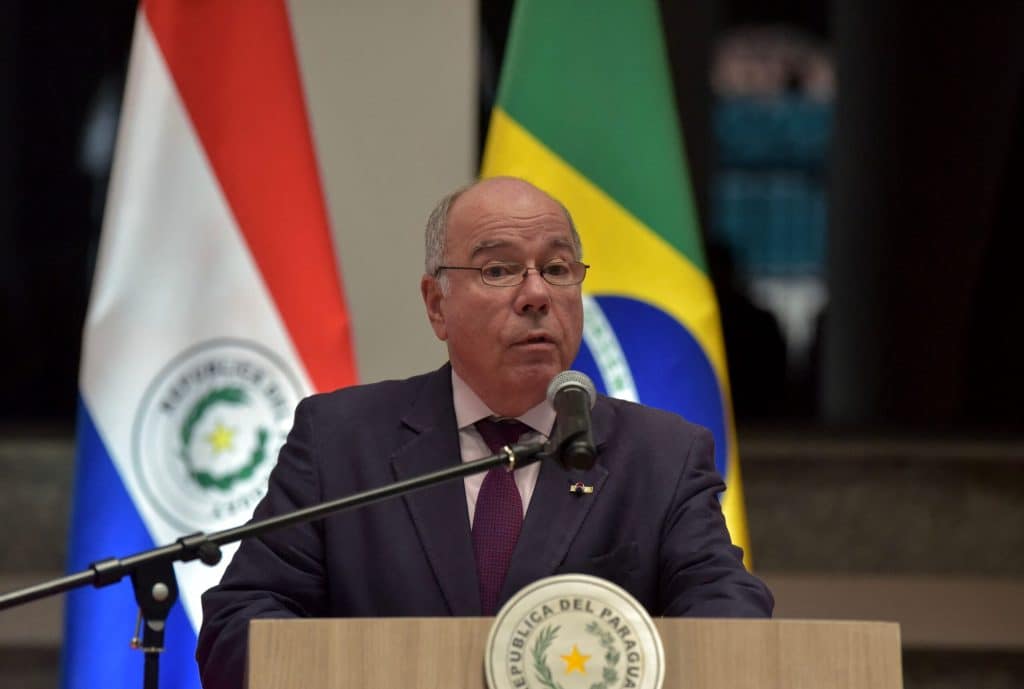
The call, placed on March 8, 2026, the day after the Doral summit concluded, was the most visible sign yet of a crisis that has been building in Brasília for months. The technical work inside the State Department is complete. The documentation designating Brazil’s Primeiro Comando da Capital and Comando Vermelho as Foreign Terrorist Organizations has cleared every internal review. According to sources close to the Trump administration, it awaits only the signature of Rubio himself, after which it goes to Congress and the Federal Register — a process that takes approximately two weeks from start to formal effect. Brazil’s diplomatic offensive to stop it has, so far, failed to find traction.
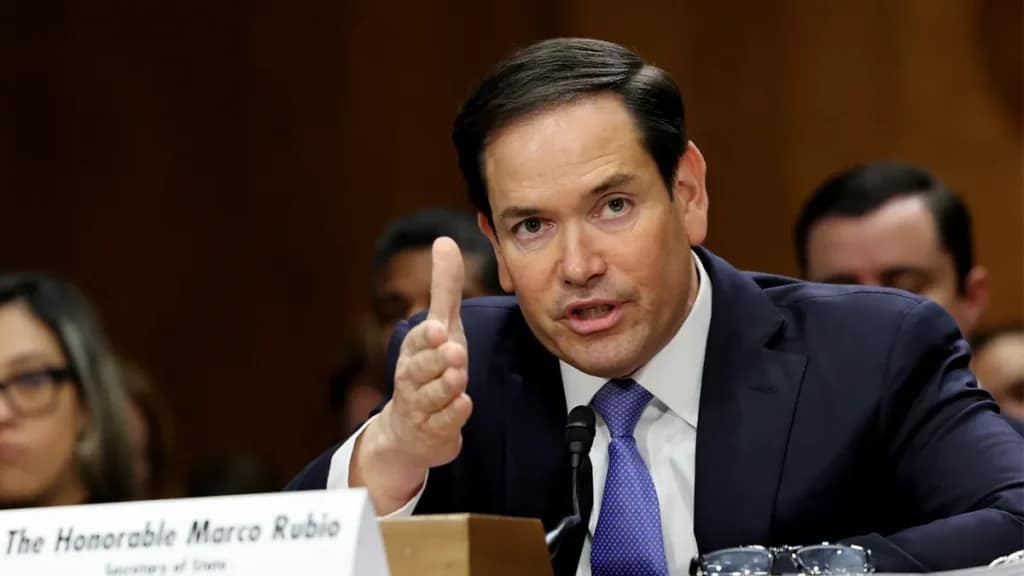
The FTO designation is not, in isolation, an act of war. It is a legal classification, with specific and well-defined consequences: asset freezes against designated individuals, exclusion from the U.S. financial system, enhanced immigration scrutiny, and increased legal exposure for any entity that provides ‘material support’ to designated organizations. The United States has applied this designation to dozens of groups across the world, from Hamas to Hezbollah, from the Zetas to the Jalisco New Generation Cartel. In most cases, the designated countries had little objection. What makes Brazil’s case different — what makes it, in the judgment of Lula’s government, an existential rather than a technical concern — is the pipeline that has preceded it everywhere it has been applied in this hemisphere over the past eighteen months.
Related Posts:





The Designation-to-Action Pipeline
The pattern is by now well-established, and the Lula government has studied it with growing dread. In 2024, the Trump administration designated Venezuela’s Cartel de los Soles — the military-linked drug trafficking network commanded by figures close to Maduro — as a Foreign Terrorist Organization. That designation was followed, in July 2025, by the commencement of U.S. naval bombardment of Venezuelan trafficking vessels in Caribbean waters. Then came the January 3, 2026 special forces operation: a night raid, 18 minutes, Maduro in handcuffs on a plane to New York. The trajectory from legal classification to kinetic action took approximately eighteen months.
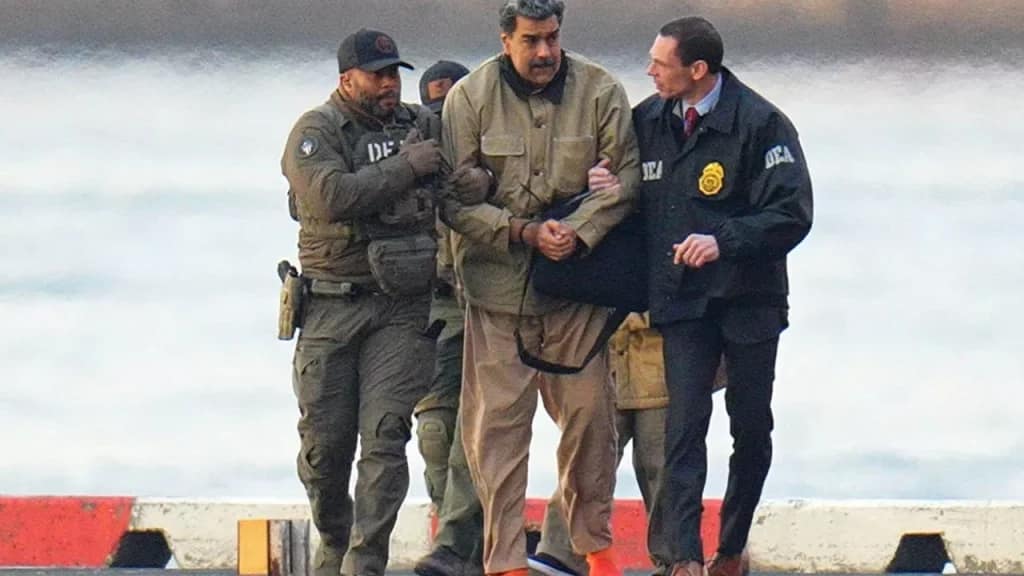
The pattern is clear: FTO designation, then financial sanctions, then naval strikes, then the capture of a head of state. Brasília has watched this pipeline operate in Venezuela and is terrified of becoming the next station.
Political scientist Maurício Santoro, one of Brazil’s most careful analysts of U.S.-Latin America relations, mapped the progression explicitly in an analysis published weeks before the Doral summit: designation could lead to FBI arrests of PCC and Comando Vermelho operatives on foreign soil; asset freezes against front companies; intelligence-sharing arrangements that expose sensitive Brazilian law enforcement data to American agencies; and — in the logic that has governed every step of Trump’s hemispheric security posture — a potential pretext for extraterritorial operations against ‘narco-terrorist’ networks in Brazilian territory.
That last possibility is what has pushed the conversation from the offices of Brazil’s Federal Police to the desk of the president himself. Lula, speaking alongside South African President Cyril Ramaphosa in Brasília on March 9 — the day after Vieira’s call to Rubio, and two days after the Doral summit — was unusually direct. ‘I don’t know if comrade Ramaphosa realizes that if we don’t prepare ourselves in terms of defense, one day someone will invade us,’ he said. It was a sentence that would have been unthinkable in Brazilian presidential discourse a decade ago. It is a sentence that reflects the specific anxiety of a government watching a superpower operate in its neighborhood with a license it has granted itself.
The proposal he made to Ramaphosa in the same breath — a joint arms-production partnership, a mutual defense technology cooperation agreement, a shared framework for resisting dependence on what he called the ‘Lords of Arms’ — was not merely rhetorical. Brazil’s defense ministry has been quietly accelerating procurement reviews, and the country’s domestically produced Gripen fighters and Astros rocket artillery systems have taken on new salience in a strategic environment where the question of what the Brazilian military could actually do in response to American pressure has become, suddenly, a live one.
The Legal Argument Brazil Is Losing
The Lula government’s formal case against the FTO designation rests on a specific and not unreasonable point of law. Brazil’s own Anti-Terrorism Law, passed in 2016, defines terrorism as acts intended to provoke ‘social or generalized terror’ with an explicit political motive — a definition that specifically and deliberately excludes profit-driven drug trafficking. Former Justice Minister Ricardo Lewandowski stated the government’s position plainly in October 2025: ‘Terrorism always involves a political note, political action, and social repercussion. Criminal factions are groups of people who systematically commit crimes capitulated in the country’s legislation’ — not terrorist organizations as understood under Brazilian law.
The argument is legally coherent within the Brazilian constitutional framework. It is also, increasingly, politically isolated. The United States does not require its definition of terrorism to match Brazil’s. The same definitional gap exists with Mexico, whose cartels have been designated FTOs despite Mexican government objections framed in nearly identical terms: these are criminal organizations pursuing profit, not political actors pursuing ideology. Washington’s response to Mexico was the same response it is now preparing to give Brazil: the characterization of narco-trafficking networks as terrorist organizations is a matter of American national security law, not a determination requiring bilateral consent.
The comparison to Mexico is instructive and alarming in equal measure. After the Jalisco New Generation Cartel and other Mexican organizations were designated, the Trump administration began issuing OFAC warnings to companies operating in Mexico about ‘increased legal risk,’ began sanctioning Mexican financial entities suspected of cartel money-laundering, and Trump himself made explicit public threats of missile strikes against cartel infrastructure on Mexican territory — threats that generated a diplomatic crisis that Claudia Sheinbaum’s government has been managing, with only partial success, ever since. Brazil, with a continental-scale economy and a sophisticated financial sector, faces an analogous exposure: once the PCC and Comando Vermelho are FTOs, every Brazilian bank that has ever processed a transaction linked to either organization — however unknowingly — faces potential American legal liability.
The Leviathan They Cannot Name
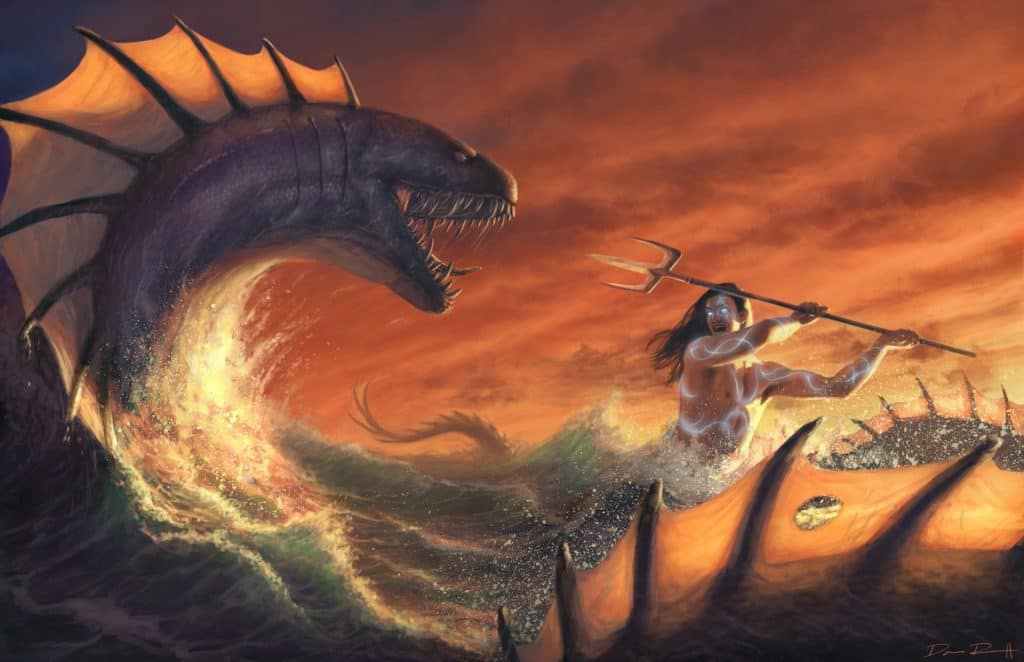
The uncomfortable core of Brazil’s dilemma is that the organizations Washington wants to designate are, by any objective measure, deserving of serious international attention. The PCC is not a domestic nuisance. It is, as the U.S. Treasury Department itself noted when it first sanctioned PCC operatives in 2021, ‘the most notorious organized crime group in Brazil and among the largest in Latin America’ — and those words, written five years ago, understate what the organization has become since.
The PCC’s annual revenue has been estimated by São Paulo state authorities at a minimum of R$4.9 billion — nearly a billion U.S. dollars per year — since 2020. In August 2025, a Brazilian Federal Revenue investigation revealed that the organization controlled at least R$30 billion in property investments alone. Its alliance with Italy’s ‘Ndrangheta, formalized in the mid-2010s, has made the PCC an indispensable intermediary in the European cocaine supply chain, with the Port of Santos — South America’s largest — serving as the primary export terminal. From Santos, cocaine moves to West Africa, then to Portugal and Spain, then across the continent. The European Parliament issued a formal inquiry in 2025 about PCC infiltration of the Portuguese prison system, where 87 active members had already been identified, 29 of them behind bars. Western Balkan criminal networks have built their entire West Africa cocaine infrastructure around partnerships with the PCC and the ‘Ndrangheta.
The organization’s reach extends to five continents. By 2022, Brookings Institution analysts described it as having become ‘a transnational criminal leviathan’ with presence across South America, Africa, Europe, and Asia. It has recruited former FARC fighters who opted out of Colombia’s peace process. It dominates the Paraguayan border — the primary entry point for cocaine from Bolivia and Peru into Brazil’s export pipeline. It has attempted to assassinate São Paulo’s governor, targeted prosecutors investigating its finances, and in October 2024 killed four police officers on the São Paulo coast in coordinated retaliatory strikes. In October 2025, its elite intelligence unit was caught mid-operation, preparing to assassinate a public prosecutor and a prison system coordinator, operating from a surveillance house complete with drones and a motorcycle team.
The PCC controls R$30 billion in property, earns nearly a billion dollars annually, operates across five continents, and has forged alliances with the Italian ‘Ndrangheta, Mexican cartels, and West African networks. Calling it a domestic criminal matter is a position that requires sustained effort to maintain.
The Comando Vermelho presents a different profile but an equally difficult problem. Rio de Janeiro’s favela-based organization has, for decades, functioned as a parallel government in communities where the Brazilian state’s presence is nominal — collecting taxes, resolving disputes, controlling movement, and maintaining order according to its own logic. In October 2025, Rio de Janeiro’s state government launched what became the deadliest police operation in Brazilian history: a massive offensive against CV strongholds that left 122 people dead. The operation produced international condemnation from human rights organizations and created a political crisis for Governor Cláudio Castro — who, pointedly, has been among the most vocal domestic voices in favor of the U.S. terrorist designation. Castro’s security secretariat was the entity that first sent documentation to Washington requesting CV’s FTO listing.
The Bolsonaro Operation: A Shadow War Inside Brazil
If the FTO designation were purely a matter of U.S. security policy, it would be complicated enough. What makes it uniquely dangerous for Lula is that it has become a weapon in Brazil’s own ongoing political civil war — and the people wielding it on the Brazilian side are operating with explicit coordination with the Trump administration.
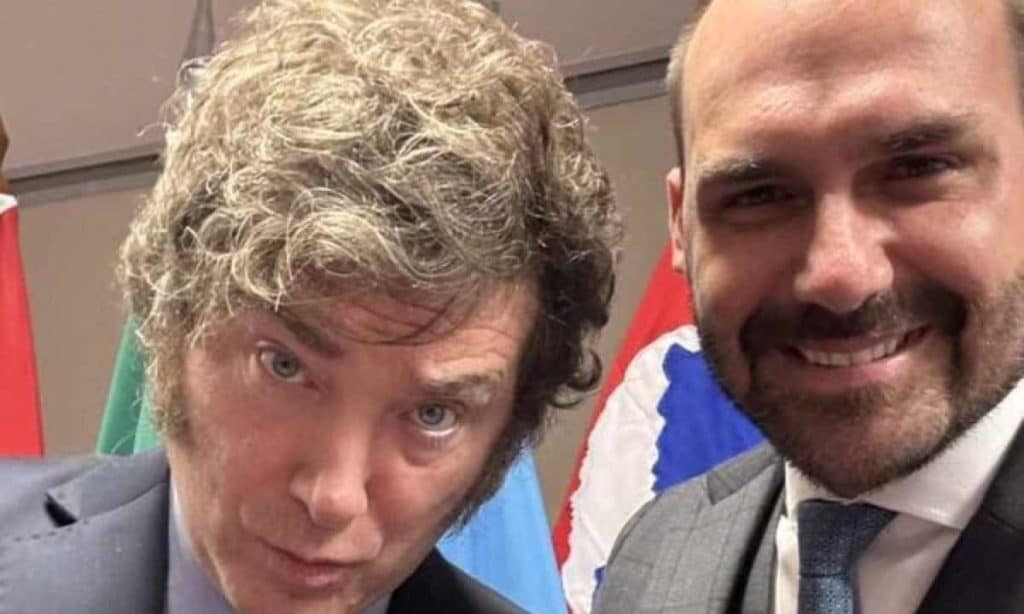
According to reporting by UOL, Brazil’s most-read news portal, Eduardo Bolsonaro — expelled from the Brazilian Congress in December 2025, less than a month after his father began serving a 27-year sentence for his role in the January 2023 coup attempt — personally lobbied Javier Milei and Nayib Bukele at the margins of the Shield of the Americas summit to accelerate the FTO designation of PCC and Comando Vermelho. Eduardo did not attend the leaders’ sessions, but he was in Doral, and his conversations with Milei and Bukele — both of whom have direct access to Trump and his cabinet — are credited by sources inside the Brazilian right with accelerating a process that had been moving at a bureaucratic pace into an imminent political action.
The strategy is transparent and, for Lula, enormously difficult to counter. Eduardo Bolsonaro has been pursuing what he explicitly calls a ‘maximum pressure campaign’ against the Lula government from Washington — lobbying the Trump administration for Magnitsky Act sanctions against Supreme Court Justice Alexandre de Moraes, who oversaw the prosecution of Jair Bolsonaro; agitating for visa restrictions on Brazilian officials; and now, apparently, leveraging the Shield of the Americas moment to deliver what would be, domestically, a devastating political blow to the government in the October 2026 election cycle.
The domestic political logic is vicious in its elegance. Lula’s Workers’ Party (PT) has spent years navigating accusations — largely weaponized by the Bolsonaro movement — of sympathizing with organized crime in Brazil’s peripheries. A 2022 campaign incident, in which Lula visited Rio’s Complexo do Alemão and was photographed in a neighborhood associated with Comando Vermelho, was amplified for months as evidence of proximity between the PT and narco-trafficking. Now, with the U.S. government preparing to label the PCC and CV as terrorist organizations, and with Lula’s foreign minister on record lobbying against that designation, the narrative writes itself: the Workers’ Party is protecting terrorists. It does not matter that the legal argument against the designation is coherent. Political campaigns do not run on legal arguments.
Political analyst commentators cited in Brazilian media have been blunt: the designation issue is the first major electoral trap that Trump has laid for Lula’s 2026 reelection campaign. Flávio Bolsonaro, the former president’s other son, announced his presidential candidacy in December 2025 and has aligned himself squarely with the Shield of the Americas worldview. His campaign’s positioning — that Brazil should join the conservative coalition, designate its own gangs as terrorists, and open itself to U.S. security cooperation rather than resist it — is precisely calibrated to the moment that the FTO designation creates.
Argentina and Ecuador: The Counter-Model
The contrast between Brazil’s posture and that of its neighbors to the south only sharpens the pressure on Lula. Argentina under Javier Milei and Ecuador under Daniel Noboa have both embraced a diametrically opposite approach to the question of international counter-narcotics cooperation — and both have extracted significant benefits from that embrace.
Milei’s Argentina has positioned itself as perhaps the most enthusiastic partner of Trump’s hemispheric security agenda, combining an anti-crime domestic posture with sweeping gestures of foreign policy alignment that have translated into IMF program renewals, bilateral investment discussions, and the kind of visible personal relationship with the American president that Argentina has not enjoyed since the Menem era. Milei’s attendance at Doral, his personal friendship with Trump, and Argentina’s willingness to join the Shield of the Americas framework without reservation have made Buenos Aires a node of the new conservative hemispheric network. The practical benefits — financial market confidence, reduced country risk, access to U.S. development finance — are real and visible.
Ecuador’s Noboa has taken the most operationally aggressive approach of any regional government, signing agreements with the United States in early 2026 that explicitly authorize joint U.S.-Ecuadorian military operations against drug trafficking networks within Ecuadorian territory. Ecuador declared a state of internal armed conflict in 2024 following a wave of cartel violence — sparked partly by the escape and subsequent killing of narco-leader ‘Fito’ — that shocked a country accustomed to relative stability. Noboa’s willingness to invite American military personnel into joint operational roles against cartels is the most direct expression yet of what full Shield of the Americas partnership looks like in practice. For Washington, Ecuador is the model. For Lula, it is a warning.
The implicit message from Doral — delivered not through diplomatic cables but through the sheer visual contrast of which governments were in the room and which were not — is that the choice for Latin American governments is becoming binary. Countries that align with the Shield get access: to U.S. intelligence, U.S. development finance, U.S. diplomatic cover, and the deterrent effect of American military backing. Countries that resist alignment get something else: designations, pressure campaigns, the mobilization of domestic oppositions with Washington’s support, and the growing possibility that American security operations in the hemisphere will be conducted without their consent rather than with their cooperation.
The Impossible Position — and What Comes Next
Lula’s dilemma is, in the end, a structural one that no amount of diplomatic skill can entirely dissolve. Brazil is simultaneously the largest obstacle to Washington’s hemispheric vision and the country in the hemisphere that most urgently needs what Washington could offer — if only the terms were different.
Brazil has a genuine and severe organized crime problem. The PCC and Comando Vermelho are not organizations that the Brazilian state has successfully contained; they are organizations that have, in significant respects, outgrown the Brazilian state’s capacity to address them domestically. The failure of the October 2025 Rio operation — which killed 122 people and produced international condemnation without measurably degrading Comando Vermelho’s operational capacity — is the most visible symbol of a broader institutional failure. Brazil’s federal police and intelligence services know this. Parts of the Brazilian justice system know this. Rio de Janeiro’s governor has said it publicly.
What Lula cannot do — politically, legally, or ideologically — is accept Washington’s framework for addressing it. Accepting the FTO designation means accepting that Brazil’s internal security is a matter on which a foreign power has naming rights. It means accepting the legal exposure that follows for Brazilian financial institutions and corporations. It means accepting the Venezuela precedent — that designation is a step on a pathway that ends, potentially, in extraterritorial action on Brazilian soil. For a president who has made sovereignty and multilateralism the twin pillars of Brazil’s foreign policy identity, and for a government that has watched the United States extract a sitting head of state from a neighboring country without legal authorization, these are not acceptable terms.
The only path that avoids the worst outcomes requires Lula to thread an extraordinarily narrow needle: demonstrating sufficient domestic action against the PCC and Comando Vermelho to give Rubio a political argument for delaying or limiting the designation, while not surrendering the legal and diplomatic positions that protect Brazil’s sovereignty. The Operação Carbono Oculto of 2025 — a major federal investigation that exposed PCC financial links to legitimate economic sectors and netted significant arrests — was a step in that direction. So was the intelligence cooperation framework Brazil and the United States have been quietly deepening since 2010. The question is whether these gestures are sufficient to shift the calculus of a Trump administration that has shown, in Venezuela, Ecuador, and El Salvador, that it prefers bold action to patient institution-building.
The October 2026 presidential election hovers over every decision. Flávio Bolsonaro’s campaign will make the FTO question — and Lula’s resistance to it — a central theme. The Shield of the Americas is not just a security architecture. It is an electoral weapon, deployed with precision against the government in Brasília by a political opposition that has found, in Washington, a patron willing to hold it. Lula came to power promising to restore Brazil’s global standing after the Bolsonaro years. He now faces the possibility that the most powerful country on Earth is actively working, through legal classifications and diplomatic pressure and the mobilization of his domestic opponents, to ensure he does not stay in power long enough to define what that standing looks like.
Whether the FTO designation arrives in days or weeks, and whether it triggers the cascade Brasília fears or stops short of it, one thing is already clear: the Shield of the Americas has made Brazil the central contested territory of hemispheric politics. The giant is in the crosshairs. And unlike Guyana, unlike Ecuador, unlike El Salvador, it is a giant that has decided — for better or worse — to fight back.
— ◆ —
March 11, 2026