


Shield of the Americas

How Trump’s New Conservative Alliance Is Reshaping the War on Cartels, Migration, and Chinese Influence in Latin America
eyesonguyana
On a humid Saturday morning in Doral, Florida, the gilded ballroom of Trump National golf resort became the stage for something Washington had not attempted since the Cold War: the deliberate assembly of a conservative military coalition across the Western Hemisphere. Thirteen heads of state, flanked by the U.S. secretaries of state, defense, and treasury, gathered under a banner that declared their shared purpose in three words — Shield of the Americas. The message to those not in the room was equally clear.
What unfolded at the inaugural Shield of the Americas Summit on March 7, 2026, was more than a diplomatic photo opportunity. It was the formalization of a new security architecture for the Western Hemisphere — one built not on broad multilateral consensus, but on ideological alignment and a willingness to use lethal military force against drug cartels and transnational criminal organizations.
A Summit Born from Wreckage
The gathering did not emerge from careful diplomatic planning. It was born from the wreckage of what was supposed to be the 10th edition of the Summit of the Americas, originally scheduled to be hosted by the Dominican Republic. That summit collapsed spectacularly when the Dominican Republic — under pressure from the White House — barred Cuba, Nicaragua, and Venezuela from attending. In response, leftist leaders from Colombia and Mexico threatened to boycott, and without any commitment from President Trump to attend, Dominican President Luis Abinader pulled the plug, citing what he diplomatically described as ‘deep differences’ in the region.
Trump’s team pivoted fast. Rather than salvage the traditional format, the White House invented a new one — a hand-picked assembly of right-wing allies willing to do what broader multilateral forums could not: sign a joint declaration committing to the use of military force against cartels.
Related Posts:


The name itself carries symbolic weight. The Monroe Doctrine of 1823 described itself as a protective ‘shield’ against European interference in the Americas. Two centuries later, Trump invoked the same language, articulating what his national security strategy calls the ‘Trump Corollary’ — an updated version of Monroe’s doctrine, now aimed not at European empires, but at Chinese economic encroachment and narco-terrorist networks.
The Coalition: A New Map of Latin America’s Right
The leaders assembled at Doral read like a who’s who of the hemisphere’s resurgent conservative movement. Argentina’s anarcho-capitalist President Javier Milei, who has compared himself to a ‘lion’ sent to dismantle the socialist state, occupied a seat of honor alongside El Salvador’s Nayib Bukele — perhaps the most globally recognizable figure of the new Latin American right.
Bukele’s model of governance — mass incarceration of gang members, the construction of a sprawling ‘mega-prison’ known as CECOT, and a near-total military crackdown that has transformed El Salvador from one of the hemisphere’s most violent countries to one of its safest — has become both inspiration and controversy. Politicians from Colombia to Honduras have toured CECOT. The United States deported over 200 Venezuelan migrants there last year, bypassing due process in a move condemned by human rights organizations and celebrated by Trump’s base.
Also present were Ecuador’s Daniel Noboa, whose country recently announced joint military operations with U.S. forces against drug trafficking networks; Honduras’s newly elected Nasry Asfura, who won a disputed election with visible Trump backing; Paraguay’s Santiago Peña; Panama’s José Raúl Mulino; Bolivia’s Rodrigo Paz; the Dominican Republic’s Luis Abinader; Costa Rica’s Rodrigo Chaves; Guyana’s Mohamed Irfaan Ali; and the prime ministers of Trinidad and Tobago and Jamaica. Chile’s sitting president, leftist Gabriel Boric, was pointedly passed over in favor of president-elect José Antonio Kast, who campaigned on what commentators called a hard-line ‘Trumpista’ platform.
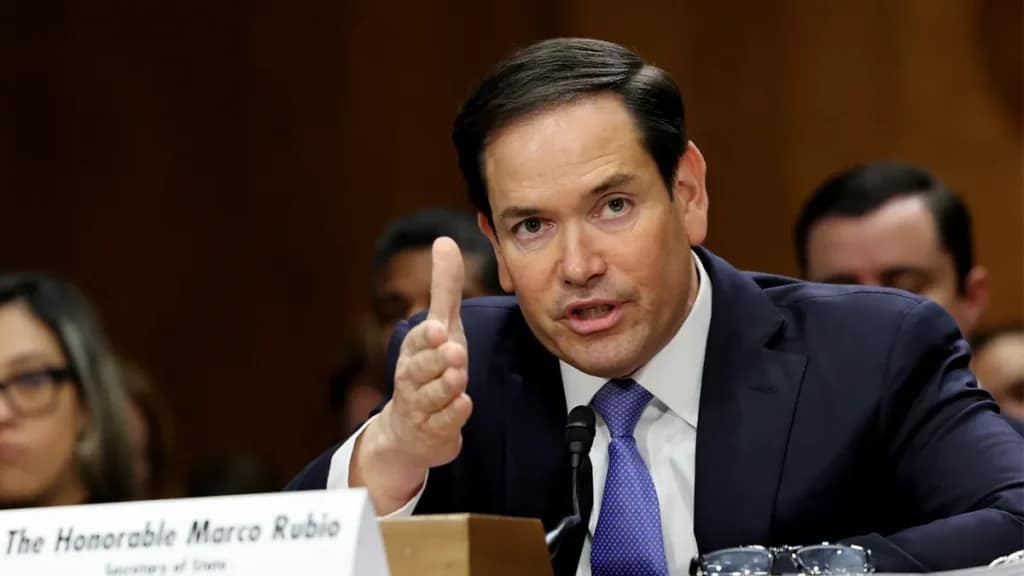
Senior U.S. officials crowded the room: Secretary of State Marco Rubio, Defense Secretary Pete Hegseth, Treasury Secretary Scott Bessent, Commerce Secretary Howard Lutnick, and newly appointed Special Envoy for the Shield of the Americas, former Homeland Security Secretary Kristi Noem. Noem offered the assembled leaders her personal cell phone number, pledging direct and constant contact. ‘So that you can reach me at any time,’ she told them — an unusual gesture that underscored the coalition’s emphasis on personal, trust-based relationships over bureaucratic process.
Trump’s Message: Unleash the Military
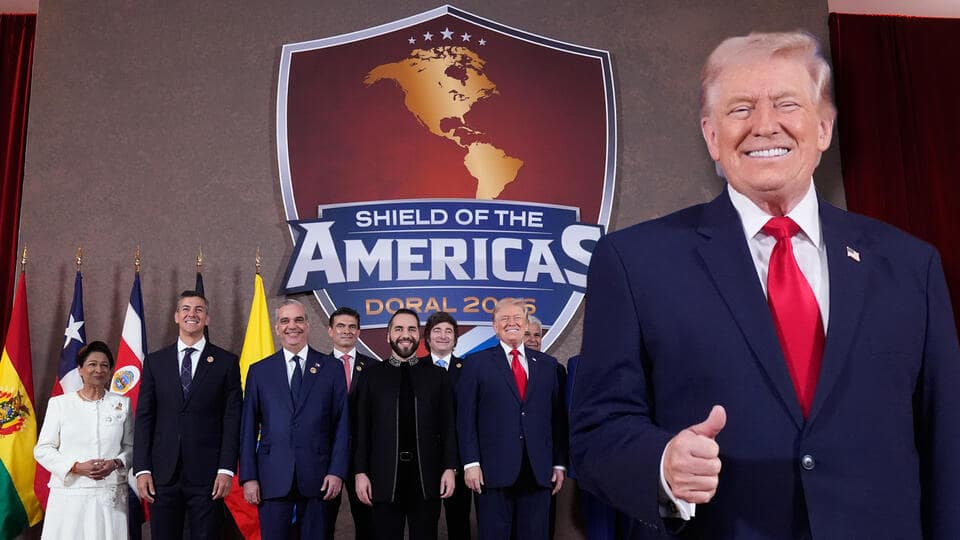
Trump’s address was direct and unambiguous. Standing before the assembled leaders, the president declared that the coalition represented ‘a commitment to using lethal military force to destroy the sinister cartels and terrorist networks.’ He told the assembled heads of state that police forces alone were insufficient — that the only path to defeating the cartels was through the full deployment of military power.
‘The only way to defeat these enemies,’ Trump said, ‘is by unleashing the power of our militaries. We have to use our military. You have to use your military.’ He then praised America’s ‘amazing weaponry,’ noting that partner nations only needed to identify cartel operatives’ locations — the United States would handle the rest.
The declaration signed at the summit established what the White House officially calls the Americas Counter-Cartel Coalition. The seventeen signatory nations agreed to expand intelligence-sharing networks, coordinate maritime interdiction across both the Caribbean and the Pacific, and jointly target cartel financial infrastructure. The Trump administration framed the initiative as a direct response to what U.S. officials now increasingly label ‘narco-terrorist organizations’ — a designation with significant legal and operational implications, as it allows the U.S. military to treat drug trafficking networks with the same rules of engagement applied to foreign terrorist groups.
Trump also turned his fire toward Mexico, calling it the ‘epicenter of cartel violence,’ and issued a stark warning about Cuba. ‘Cuba’s at the end of the line,’ he told the assembled leaders. ‘They have no money. They have no oil… Cuba’s in its last moments of life as it was.’ The room, composed entirely of leaders broadly sympathetic to Trump’s hemispheric vision, received his remarks without visible dissent.
Migration, China, and the Bigger Picture
The anti-cartel mission is one pillar of a broader strategic architecture. The Trump administration has made countering Chinese influence in the Western Hemisphere a top foreign policy priority, arguing that Beijing has used infrastructure investment, trade agreements, and military cooperation to steadily displace American influence across the region.
The numbers are striking. In 2001, virtually every country in South America conducted more trade with the United States than with China. Two decades later, nearly the entire continent — with the exception of Paraguay and Colombia — trades more with Beijing than with Washington. The trajectory has alarmed U.S. strategists, who see Chinese-funded ports, telecommunications infrastructure, and aerospace facilities as potential dual-use military assets.
The Shield of the Americas is explicitly designed to reverse this trend. Closer alignment with Washington is expected to translate into expanded access to U.S. development finance, technology partnerships, and preferential terms in the supply chain reshoring that the Trump administration is pursuing as part of its ‘America First’ economic agenda. For smaller economies like Ecuador, El Salvador, and Paraguay, the summit represented a rare opportunity to secure direct access to the most powerful figures in the U.S. government.
Migration policy is the third leg of the coalition’s agenda. Several summit participants have already adopted aggressive enforcement postures aligned with Washington’s preferences — building detention capacity, accepting deportation flights, and in some cases deploying military assets to their own borders. The logic is transactional: demonstrate commitment to Trump’s migration priorities, and receive intelligence, security assistance, and political cover in return.
The Bukele Effect: A Model or a Warning?
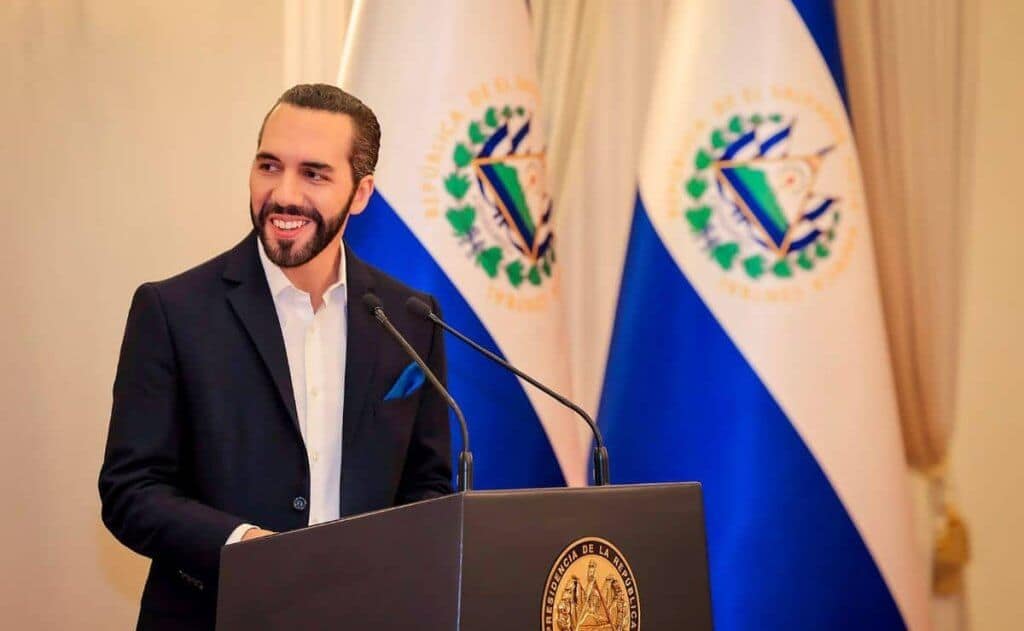
No figure at the summit has captured the global right’s imagination quite like Nayib Bukele. The 42-year-old Salvadoran president’s Estado de Excepción — a sustained state of emergency now stretching into its fourth year — has resulted in the imprisonment of over 80,000 suspected gang members, transforming a nation that once recorded among the world’s highest per-capita homicide rates into one with statistics comparable to much of Western Europe.
To his admirers, Bukele has accomplished what generations of politicians failed to do: broken the MS-13 and Barrio 18 gangs that had turned El Salvador into a nightmare of extortion, murder, and displacement. His approval ratings routinely exceed 80 percent — extraordinary for any political leader, let alone one governing a country that lived under gang terror for decades. For the leaders at Doral, many of whom face their own spiraling security crises, El Salvador’s transformation holds an obvious appeal.
Critics offer a more sobering assessment. Human rights organizations have documented thousands of wrongful detentions, deaths in custody, and the suspension of basic due process rights. The megaprison CECOT — a photogenic symbol of Bukele’s iron fist — has been condemned by international observers as a facility of mass detention without adequate legal safeguards. The United States’ own decision to deport Venezuelan migrants to CECOT without individual hearings drew legal challenges at home and fierce condemnation abroad. Whether the Bukele model represents a replicable security solution or a descent into institutionalized human rights violations remains one of the most contested questions in hemispheric politics.
Why Brazil Wasn’t at the Table — And What It Reveals
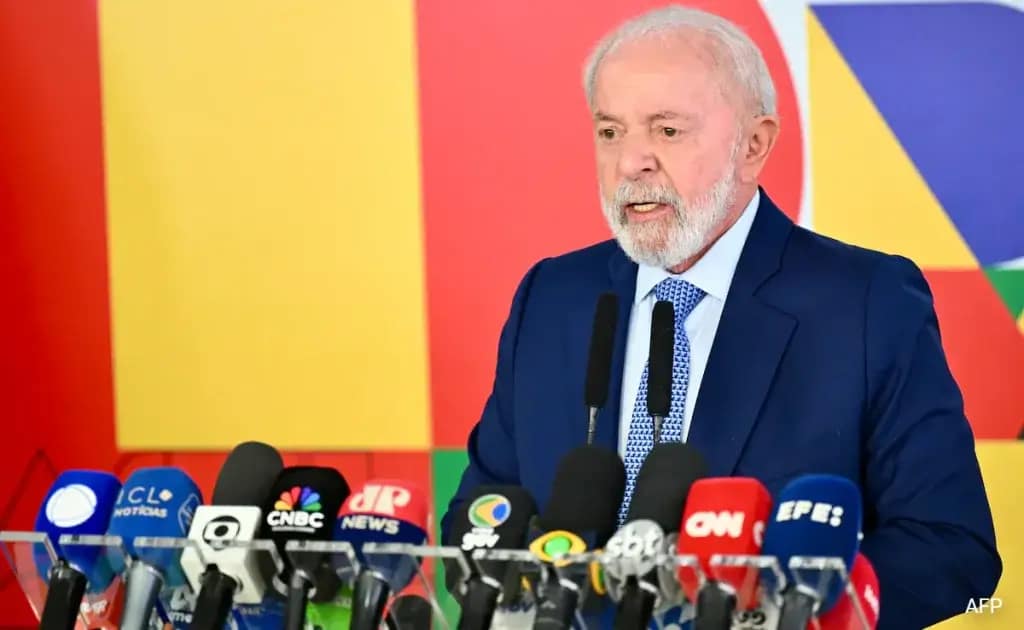
The absence of Brazil, Mexico, and Colombia from the Doral summit was not an oversight. It was the summit’s defining feature. Together, those three nations represent more than half of Latin America’s GDP. They are also home to the lion’s share of the region’s illicit drug production, trafficking networks, and criminal organizations. Any serious counter-cartel strategy that excludes them is, by definition, incomplete.
Brazil’s exclusion is particularly consequential — and particularly revealing. Under President Luiz Inácio ‘Lula’ da Silva, Brazil has positioned itself as the region’s leading voice of resistance to what Lula has called the ‘Donroe Doctrine’ — Trump’s muscular, interventionist update to the Monroe Doctrine. Lula, Mexico’s Claudia Sheinbaum, and Colombia’s Gustavo Petro have all publicly condemned the January 2026 U.S. special forces operation that captured former Venezuelan President Nicolás Maduro and transferred him to New York to face narco-terrorism charges — a remarkable 18-minute raid on a sovereign nation that sent shockwaves through even governments broadly sympathetic to Washington.
But there is more to Lula’s absence than ideology. Brazil is home to two of the most powerful and sophisticated criminal organizations in the Western Hemisphere: the Primeiro Comando da Capital (PCC), which has metastasized from a São Paulo prison gang into a transnational narco-trafficking network with tentacles in Paraguay, Bolivia, West Africa, and Europe; and Comando Vermelho, the Rio de Janeiro-based organization that effectively governs entire favela communities across the country’s most populous city.
The Trump administration has been preparing to designate both the PCC and Comando Vermelho as Foreign Terrorist Organizations — a classification that would trigger automatic financial sanctions, enable asset freezes against front companies, and potentially open the door to extraterritorial operations. Brazil’s Foreign Minister Mauro Vieira placed an urgent call to Secretary Rubio in the days surrounding the summit, pushing back vigorously against the designation.
The Lula government’s objection is not merely diplomatic pride. It is strategic calculation rooted in a specific and well-founded fear: the United States has established a disturbing pattern. The Cartel de los Soles in Venezuela was first designated a terrorist organization, then subjected to naval bombardment, then used as legal justification for the capture of Maduro himself. Lula’s government looks at that pipeline — designation, then sanctions, then military action — and sees in it a potential template for Brazil.
‘Brazil could be invaded any day if it fails to strengthen its defenses,’ Lula told reporters alongside South African President Cyril Ramaphosa the day after the Doral summit, proposing a joint arms-production partnership with Pretoria as part of what he framed as an alternative to dependence on what he called the ‘Lords of Arms.’ It was a striking statement — an implicit acknowledgment that Washington’s actions in Venezuela had shattered long-held assumptions about the limits of American military power in the region.
The Lula government’s position on its own criminal organizations reflects a deeper philosophical divergence with Washington. Brasília maintains that organized crime is a domestic public security matter, to be handled by police and prosecutors within constitutional bounds — not a category that invites foreign powers to name Brazil’s enemies and potentially act against them. Rio de Janeiro’s Governor Cláudio Castro has broken publicly with Lula on this, calling for international sanctions against the gangs following the deadliest police operation in Rio’s history in October 2025, which killed 122 people. Right-wing presidential candidates in Brazil’s October 2026 elections — led by Flávio Bolsonaro, son of Trump’s friend and ally Jair Bolsonaro, who is currently on trial for his alleged role in the January 2023 coup attempt — are expected to embrace the U.S. terrorist designation as a campaign weapon.
The result is a hemisphere in the early stages of crystallizing into two competing security blocs: a U.S.-led coalition of conservative governments willing to accept American military operations within their borders and on their behalf, and a loosely aligned grouping of left and center-left governments — led by Brazil, Mexico, and Colombia — that are increasingly treating Washington’s interventionist posture as an existential threat to the principle of sovereignty itself. Whether the Shield of the Americas becomes a genuine security architecture or another entry in Latin America’s long list of defunct multilateral initiatives may depend less on what happens in Doral than on what happens in Brasília in October.
— ◆ —