


Bridging Continents

How ENRICH in LAC and Uruguay Are Rewriting the Rules of Global Innovation
Where Europe meets Latin America, a quiet revolution in science, technology, and sustainability is underway — and Uruguay is at its centre.
eyesonguyana
A Network Built for the Future
In a world where breakthrough discoveries rarely happen in isolation, the European Network of Research and Innovation Centres and Hubs in Latin America and the Caribbean — known as ENRICH in LAC — is a bold bet on the power of international collaboration. Funded by the European Commission under the Horizon 2020 research and innovation programme, the initiative has grown from a bilateral Brazil-focused project into a hemisphere-spanning network that today connects innovation actors across Argentina, Brazil, Chile, Colombia, and Uruguay with their counterparts across Europe.
The concept is elegant in its ambition: create a living ecosystem where scientists, entrepreneurs, universities, and governments on two continents can find each other, build partnerships, and co-develop solutions to the world’s most pressing challenges. From health and digital transformation to bioeconomy, renewable energy, and sustainable urbanisation, ENRICH in LAC has positioned itself at the intersection of the global issues that matter most.
The network’s mission is clear — to unlock new business opportunities, share knowledge, and exchange innovative practices through a curated international community of key players in science, technology, and innovation. And in Uruguay, that mission has found fertile ground.
Uruguay: Small Country, Outsized Ambitions
Uruguay punches well above its weight. With a population of just under 3.5 million, the country might seem an unlikely candidate to lead the world in clean energy, digital governance, and international innovation cooperation. And yet, here it stands — a nation that has transformed its electricity grid to run on nearly 99% renewable energy, that has become a magnet for European clean-tech investment, and that is now emerging as one of Latin America’s most dynamic innovation hubs.
Related Posts:






When ENRICH in LAC expanded beyond Brazil in 2021, Uruguay’s inclusion was no accident. The country’s stable regulatory environment, commitment to science, and forward-thinking public institutions made it a natural partner. Since then, the relationship has deepened in ways that extend far beyond formal agreements and memoranda.
A particularly telling moment came when ENRICH in LAC sent a delegation to Montevideo for a week of intensive meetings — culminating in the delivery of the initiative’s first on-site course on Strategic Foresight at UTEC, the Technological University of Uruguay. Alongside this, ENRICH initiated formal dialogues with ANII, Uruguay’s national research and innovation agency, signalling a deepening institutional commitment to the country’s innovation ecosystem.
UTEC: The Softlanding Hub That Changes Everything
At the heart of Uruguay’s participation in ENRICH in LAC sits a remarkable institution: the Universidad Tecnológica del Uruguay (UTEC). Founded with a clear mission — to bring high-quality public technological education to Uruguay’s interior — UTEC has evolved into something far greater: a distributed innovation engine with campuses spanning the country from Rivera in the north to Maldonado in the south.
UTEC’s Department of Innovation and Entrepreneurship runs interdisciplinary programmes designed to cultivate 21st-century skills, offering students access to open innovation laboratories, digital fabrication workshops, co-working spaces, and state-of-the-art 3D printing facilities. The university is built around what it calls a “triple helix” approach — genuine collaboration between the academic world, the private sector, and government — to produce graduates with a truly entrepreneurial and creative professional profile.
As a softlanding hub for ENRICH in LAC, UTEC offers something uniquely valuable: a bridge between the world of formal higher education and the lived realities of regional business and community development. Foreign entrepreneurs and researchers arriving in Uruguay don’t simply land in Montevideo and hope for the best. Through UTEC’s network of regional campuses and innovation spaces, they gain access to mentors, co-working infrastructure, incubation support, and connections to the local productive sector — all at no cost to students and early-stage entrepreneurs.
The university’s incubator is especially noteworthy. Focused explicitly on companies with the potential to generate genuine value, jobs, and local economic impact, it provides structured guidance to take an idea from whiteboard to market. For European companies seeking to enter the Latin American market — or Uruguayan innovators looking to scale internationally — this kind of hands-on support infrastructure is invaluable.
UTEC’s role in the ENRICH ecosystem also connects to global efforts in Power-to-X technologies. The PtX Hub, a German-supported initiative promoting expertise in renewable power-to-X industries, has included visits to UTEC as part of its Train-of-Trainers programme, recognising the university as a key node in building the professional capacity needed to underpin Uruguay’s emerging green hydrogen economy.
The Green Revolution: Uruguay’s Energy Story
To understand why international partners are so eager to engage Uruguay, one must first understand what this country has already achieved in the realm of clean energy — a transformation that stands as one of the most remarkable in modern economic history.
Not long ago, Uruguay suffered chronic blackouts and depended on expensive fossil fuel imports for nearly half its energy needs. Today, the country generates 99% of its electricity from renewable sources — a mix of hydropower, wind, biomass, and solar — and has effectively decarbonised its entire electricity sector. Consumer electricity prices fell as the transition gathered pace. Today, more than 700 wind turbines dot the Uruguayan countryside, and the national grid is among the cleanest in the world.
This transformation was not accidental. It was the result of a deliberate, long-term policy strategy built on public-private partnership, regulatory clarity, and an unusually bipartisan political consensus. The model — where private companies install and maintain generation assets while the public utility distributes power — has become a reference point for energy transition planning around the world.
Now, Uruguay is entering a second phase of its energy ambition. Having conquered electricity, the country is turning its attention to transport, heavy industry, and the production of green hydrogen derivatives. The goal: full decarbonisation by 2050.
Green Hydrogen, e-Fuels, and the Next Frontier
The scale of what is being contemplated in Uruguay today is extraordinary.
HIF Global, the world’s leading e-fuels company, has signed an implementation agreement with ALUR — part of Uruguay’s state-owned ANCAP group — to build a facility in Paysandú capable of producing 700,000 tonnes of synthetic renewable fuels per year. With an estimated investment of USD 6 billion, the project would recycle 900,000 tonnes of CO₂ annually and position Uruguay as a global exporter of clean synthetic fuels to Europe and Asia. In its initial stage alone, annual export revenues are projected at USD 253 million.
Meanwhile, in the Tambores area between Tacuarembó and Paysandú, a joint venture between Germany’s Enertrag and Uruguay’s SEG Ingeniería is advancing plans to produce approximately 84,000 tonnes of green methanol per year — integrating wind and solar generation with sustainable water use and export logistics through the Port of Montevideo.
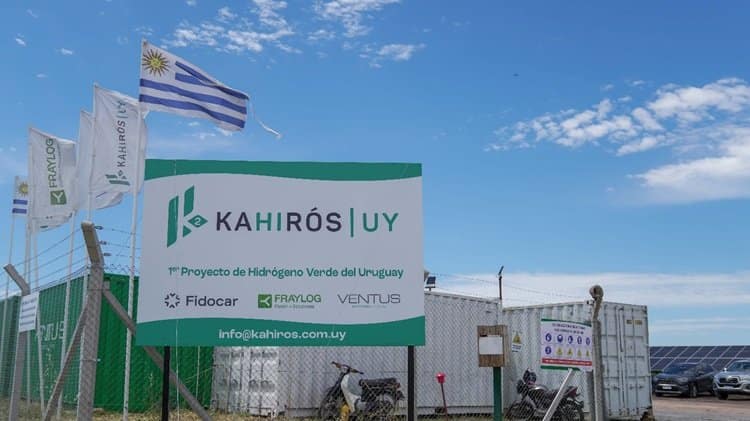
In Río Negro, the Kahirós consortium is constructing Uruguay’s first green hydrogen plant, designed to supply heavy-duty trucks in the forestry sector, powered by an on-site photovoltaic installation.
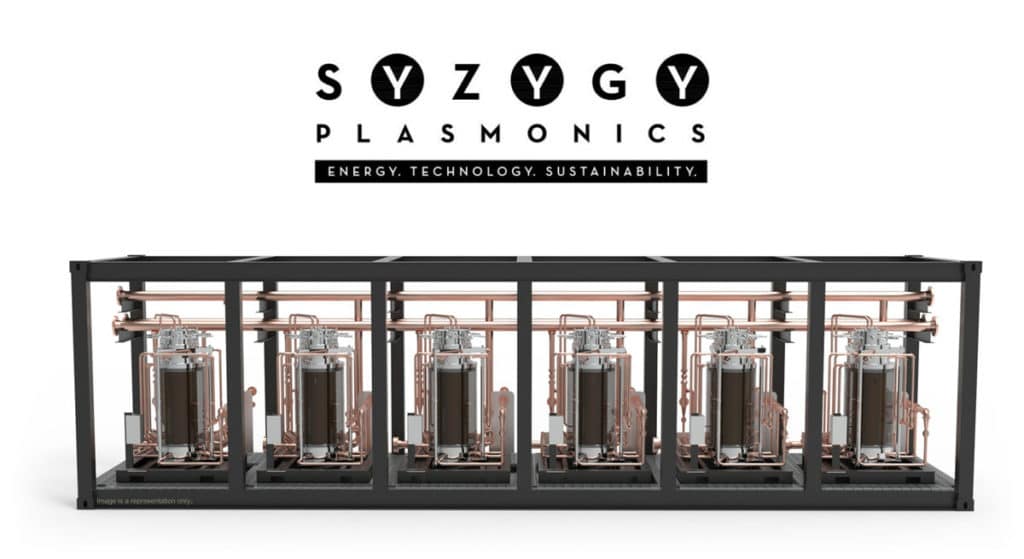
And in June 2025, Texas-based Syzygy Plasmonics announced plans to build NovaSAF 1 in Durazno — the world’s first fully electrified biogas-to-Sustainable Aviation Fuel (SAF) facility — in partnership with Estancias del Lago, converting raw biogas from dairy farms into drop-in aviation fuel using light-powered reactor technology.
Uruguay’s government projects that a mature green hydrogen industry could generate more than 30,000 skilled jobs and contribute USD 1.9 billion annually to the economy by 2040.
These are not distant dreams. They are projects currently advancing through environmental authorisation, engineering design, and investment structuring — backed by the international credibility that Uruguay’s energy track record affords.
Digital Innovation and the Knowledge Economy
Uruguay’s innovation story is not only written in wind turbines and hydrogen tanks. The country has also cultivated a vibrant technology and knowledge sector that makes it a natural fit for ENRICH in LAC’s digital and ICT thematic priorities.
UTEC’s programmes in information technology, mechatronics, industrial automation, and data science are directly connected to the needs of Uruguay’s productive sector. Research projects using satellite imagery to optimise water consumption in rice production, software tools to support urban planning by departmental governments, and cutting-edge work in cybersecurity and artificial intelligence all demonstrate the breadth of applied research underway at the institution.
ENRICH in LAC’s engagement withANII — Uruguay’s national research funding agency — further strengthens the pipeline between university research and commercial application. ANII provides competitive grants, investment incentives, and international cooperation frameworks that complement ENRICH’s own service portfolio, creating a comprehensive support structure for innovation at every stage of development.
Uruguay has also been an active participant in ENRICH in LAC’s European Entrepreneur Expedition, which invited selected Latin American entrepreneurs to immerse themselves in Porto’s innovation ecosystem — visiting technology centres, business hubs, and soft-landing facilities. This kind of curated, person-to-person exchange is exactly the type of experiential learning that turns network connections into lasting partnerships.
A Model for the Region
What makes the ENRICH in LAC partnership with Uruguay so compelling is not any single initiative or institution, but the coherence of the whole. Uruguay offers something rare: a small country with strong institutions, political stability, a genuine commitment to sustainability, and the intellectual infrastructure to translate ambition into results.
UTEC, as a softlanding hub, provides the connective tissue between global networks and local realities. ENRICH in LAC provides the international relationships, the European Commission backing, and the thematic focus on exactly the industries where Uruguay is building its future. ANII, UTE, and other national agencies provide the regulatory and financial scaffolding. And the country’s extraordinary energy transition provides a proof of concept — a demonstration that even small, resource-constrained nations can lead the world when they commit to a clear, long-term vision.
Investment in renewable energy across Latin America rose 18% in 2024 to reach USD 44 billion, according to the International Renewable Energy Agency. Uruguay’s share of that story is disproportionate to its size — and growing. The ENRICH in LAC network is one of the forces helping to ensure that Uruguay’s success becomes a platform not just for Uruguayan companies, but for European and global innovators who want to be part of what comes next.
Looking Ahead
The story of ENRICH in LAC in Uruguay is still being written. The softlanding infrastructure at UTEC continues to mature. The green hydrogen projects are moving from planning to construction. The bilateral cooperation between Uruguayan and European research institutions is deepening, driven by shared priorities in sustainability, digitalisation, and the bioeconomy.
What is already clear is that Uruguay has earned its place as one of Latin America’s most important innovation partners for Europe — and that ENRICH in LAC has played a meaningful role in building the connections that make that partnership real.
In a world of complex global challenges, the model on display here — long-term thinking, institutional patience, genuine collaboration across borders — may be the most important innovation of all.
Sources: ENRICH in LAC (enrichinlac.eu), Universidad Tecnológica del Uruguay (utec.edu.uy), Uruguay XXI Investment Promotion Agency, Joint SDG Fund, PtX Hub, HIF Global, U.S. Commercial Service Uruguay Country Commercial Guide, Yale Climate Connections.