


The Day the Left Lost Its Compass

How a handshake in Valparaíso between a senator’s son and a Nobel Peace Prize laureate rewrote the human rights narrative of Latin America — and left Lula watching from the wrong side of history
eyesonguyana
For three decades, the Latin American left owned the language of human rights. It was their vocabulary, their credential, their moral passport. Prison, exile, torture, disappeared journalists, stolen elections — these were the sins of the right, the inheritance of the generals, the legacy of American-backed coups that scarred the continent from Santiago to Buenos Aires. When Lula first rose to power in 2003, he carried that entire moral architecture on his shoulders: the metalworker who had been jailed, who had been silenced, who had survived — and who would never let it happen to others.
On Wednesday, March 11, 2026, in the ceremonial hall of Chile’s Congress in Valparaíso, that architecture cracked in a way that may not be repairable before October.
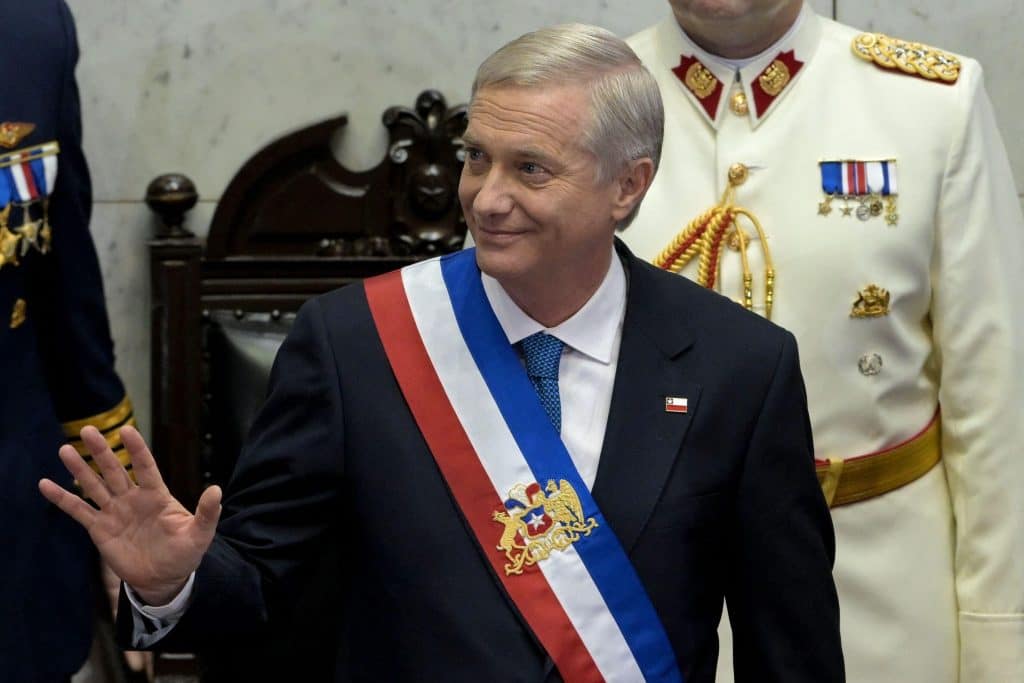
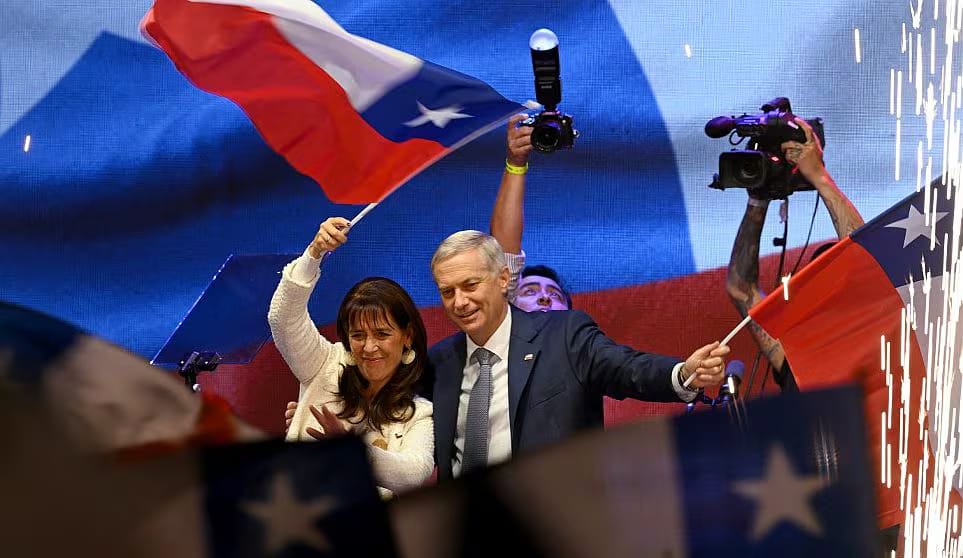
In the corridor outside the inauguration ceremony of Chile’s new president José Antonio Kast, Senator Flávio Bolsonaro — son of a convicted coup plotter, pre-candidate for the Brazilian presidency — extended his hand to María Corina Machado, Nobel Peace Prize laureate, the most internationally celebrated democracy activist in the Western Hemisphere, the woman who spent years under house arrest for defying Nicolás Maduro’s dictatorship. “You are a great inspiration for Brazilians,” Flávio said. “And you for us,” Machado replied. “I hope we can maintain contact and help each other. For justice and democracy in our countries.”
Twelve words. Exchanged in under sixty seconds. And somewhere in Brasília, the Planalto Palace felt the ground shift.
Related Posts:





The Empty Chair
What made the moment seismic was not just what happened in that corridor. It was who was not there.
Lula had confirmed, just days before, that he would travel to Valparaíso for the inauguration. His foreign ministry had framed the visit as part of the institutional relationship with Chile — a pragmatic gesture of diplomatic continuity across ideological lines. Then, hours after it emerged that Flávio Bolsonaro would also attend as an invited guest, Lula cancelled. Foreign Minister Mauro Vieira represented Brazil in his place. The official reason offered was “scheduling matters.”
Sources close to the Planalto confirmed what the diplomatic community already understood: Lula could not bring himself to appear on the same international stage as his likely October opponent, standing beside a Nobel laureate whom his own government had consistently refused to champion. The calculation was political. The result was catastrophic.
Because while Lula stayed home attending meetings with his communications secretary, the inauguration in Valparaíso was attended by Argentina’s Javier Milei, Ecuador’s Daniel Noboa, Paraguay’s Santiago Peña, Spain’s King Felipe VI — and María Corina Machado, whose presence was immediately interpreted as a powerful message to the conservative bloc taking shape across the continent. The new Latin American right had its own Davos. And the Brazilian left had sent its regrets.
How Lula Surrendered the Human Rights Flag
The story of how the Brazilian left lost the human rights narrative is not a story of one bad week. It is a story of choices made across years — choices that accumulated, one by one, into a monument of self-inflicted damage.
It began with a red carpet.
In May 2023, Lula received Nicolás Maduro at the Palácio do Planalto with full state honours — and stood before the cameras to declare that the international accusations of authoritarianism and human rights violations against Venezuela were a “narrative that was constructed” by external enemies. This was not an improvised remark. It was a considered position, repeated and defended across multiple interviews, even as the UN had already documented that the Maduro government was responsible for extrajudicial executions, forced disappearances, arbitrary detentions, and torture.
Even Gabriel Boric — then Chile’s left-wing president and by any measure Lula’s ideological cousin — publicly criticised the remarks. Human Rights Watch described it as Lula “missing a crucial opportunity to uphold rights in Venezuela.” The organisation documented over 15,700 political imprisonments since 2014, with more than 280 political prisoners still detained.
The pattern held and deepened. When Maduro was declared the winner of the 2024 election in a result almost universally condemned as fraudulent — with the Venezuelan opposition presenting ballot records showing they had won by a landslide — Lula dismissed the fraud concerns. “I see the Brazilian press treating this as if it were World War Three, but there is nothing abnormal,” he said, effectively providing international cover for a stolen election while the entire democratic West refused to recognise the result.
And when Machado herself was barred from running — her candidacy annulled by a Maduro-controlled judiciary — Lula compared her situation to his own 2018 electoral imprisonment and said: “I didn’t spend my time crying.” He dismissed the concerns of a woman who would subsequently win the Nobel Peace Prize as the complaints of a sore loser.
The accumulated result of these choices, as one editorial put it, is that “this friend of dictatorships will try to sell himself as a great democrat in 2026.” The problem is that the evidence against that narrative is now assembled, documented, and in the hands of a political opposition that knows exactly how to use it.
The Maduro Capture: The Crisis That Detonated Lula’s 2026 Playbook
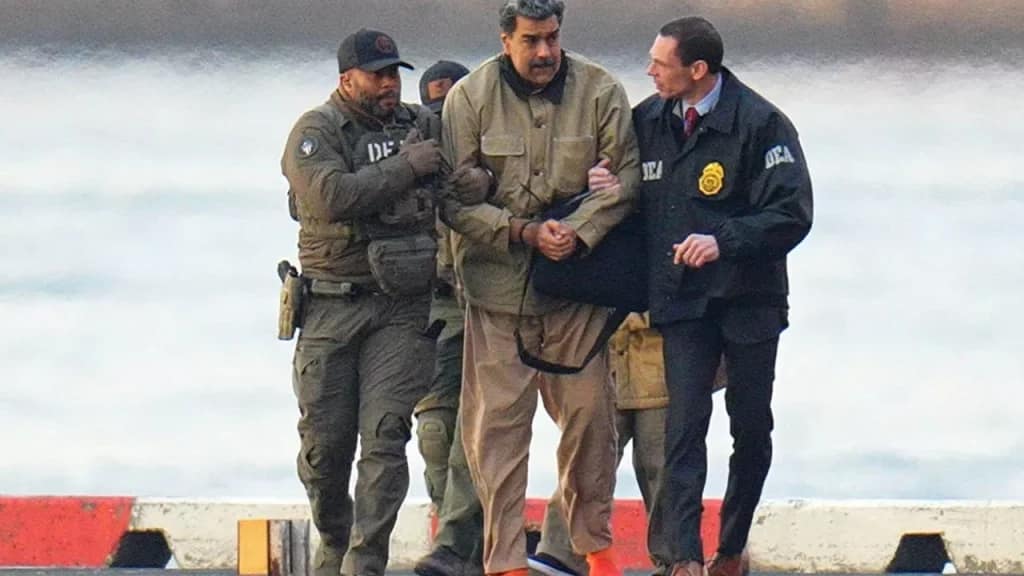
If the red carpet for Maduro was the original sin, the American capture of the Venezuelan dictator on January 3, 2026 was the moment the bill came due.
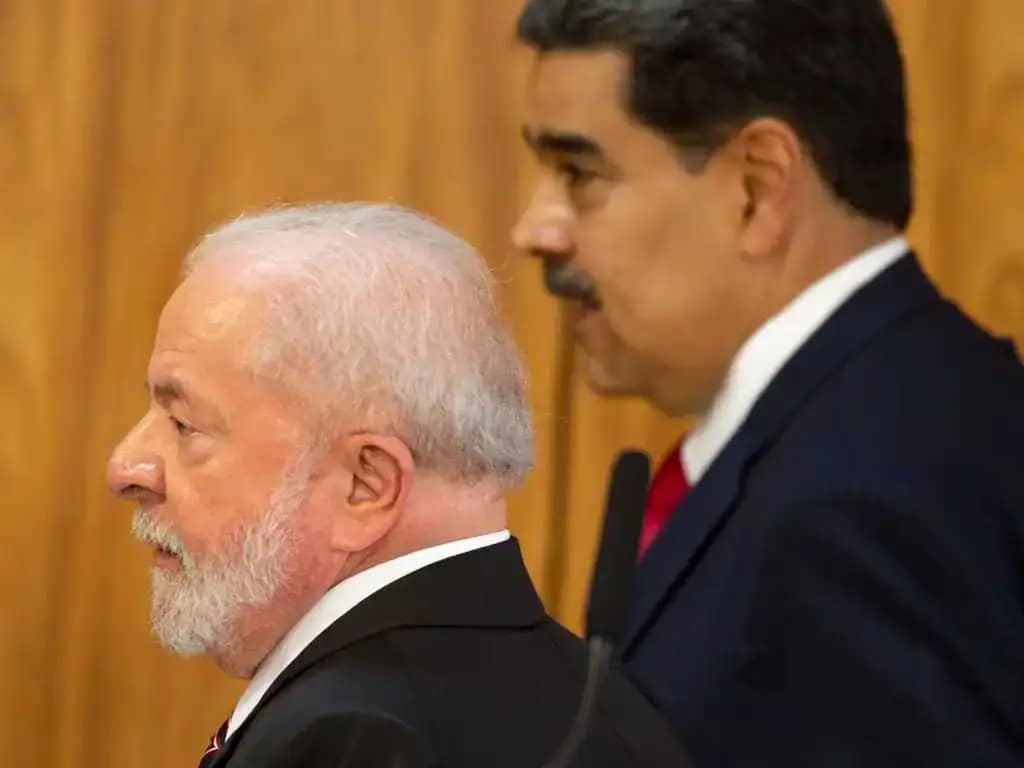
The Venezuela crisis imploded everything the Lula government had planned for the start of the election year. The Planalto’s strategy had been to open 2026 focused on policy deliveries and legislative bridge-building after a turbulent end to 2025. Instead, the president found himself defending a man captured by US forces for narcoterrorism charges in a New York courtroom — unable to even mention Maduro’s name publicly, reduced to speaking of “respect for international law” and “Latin American sovereignty” as rhetorical shields against the obvious question: whose side are you on?
The right’s response was instantaneous. Flávio Bolsonaro and the opposition amplified the contradiction at every turn — Lula defending Maduro while simultaneously claiming the democracy credentials his father had been convicted of attacking. The irony was almost too neat to be true: a man who had jailed his predecessor for trying to steal an election was defending a dictator who had openly stolen one.
Lula’s allies privately admitted the scale of the damage. “Lula could not under any circumstances fail to adopt a critical posture regarding the attack, even to defend Latin American sovereignty,” one adviser told CNN Brasil — an acknowledgement that the president was trapped between ideological loyalty to his regional partners and the electoral imperatives of a Brazilian public that largely supported Maduro’s removal.
The New Internationale of the Right
What assembled in Valparaíso on March 11 was not merely an inauguration. It was a diplomatic coming-out party for a new conservative international that, in the space of eighteen months, has achieved something the Latin American right had not managed in a generation: a coherent, emotionally resonant moral narrative.
The architecture of that narrative is elegant in its simplicity. Maduro is a dictator. Machado is a hero. Boric’s Chile tried soft socialism and was rejected at the ballot box. Milei’s Argentina chose radical freedom. Kast’s Chile followed. Ecuador’s Noboa, Paraguay’s Peña, and a dozen other conservative leaders across the continent are constructing a parallel infrastructure of summits, alliances, and mutual recognition — a right-wing equivalent of the São Paulo Forum that the PT helped found in 1990 to coordinate the Latin American left.
And at the centre of that narrative stands María Corina Machado — a woman who spent years under house arrest, whose candidacy was stolen, whose country was bankrupted by the ideology that Lula spent three terms defending. She won the Nobel Peace Prize in 2025. She met with King Felipe VI of Spain to discuss Venezuelan democracy. She embraced Flávio Bolsonaro in a corridor and told him “let’s talk.”
The optics are not accidental. They are the product of a decade of strategic positioning by a Latin American right that watched the left’s moral monopoly and decided, patiently, to build an alternative. That alternative is now operational.
Can Lula Recover the Narrative?
The answer is not obviously no — but the path is narrow and shrinking.
Lula still holds structural advantages. He governs; his opponents merely speak. The Brazilian economy, despite its turbulences, has delivered real wage growth to the working class that forms his base. His polling lead over Flávio Bolsonaro, while narrowing, remains significant.
But the human rights narrative — once his most powerful electoral asset, the story that made him not just a politician but a symbol — has been hollowed out by the very choices he made to protect ideological solidarity with governments that were always indefensible. He told Maduro to his face that his narrative was “infinitely better” than what his enemies said about him — this to a man whose government the UN had formally accused of crimes against humanity.
And now, in the year that matters most, the man carrying the human rights banner in Latin America’s largest democracy is not the former political prisoner. It is the son of the man currently serving 27 years for attempting a coup — standing in a Chilean corridor, shaking hands with a Nobel laureate, and saying all the right things about justice and democracy.
History, when it decides to be cruel, is thorough about it.
The impossible has not merely become possible. In Valparaíso, on a bright March Wednesday, it became a photograph. And photographs, in election years, have a way of lasting longer than any speech.