


Bridging Continents: How Chile’s New President Could Supercharge ENRICH in LAC

A conservative revolution in Santiago meets one of the most ambitious Europe–Latin America innovation bridges ever built.
eyesonguyana
When José Antonio Kast strode to the podium in Santiago on the night of December 14, 2025, waving a Chilean flag before a jubilant crowd, few observers were thinking about science policy. His campaign had been dominated by security crackdowns, mass deportations, and economic austerity. Yet buried within the implications of his landslide victory — Kast secured 58 percent of the vote, defeating Communist Party candidate Jeannette Jara in one of the most polarised elections in recent memory — lies a question of genuine strategic importance: what does Chile’s sharpest rightward turn in decades mean for one of its most forward-looking international partnerships?
The answer, it turns out, may be surprisingly positive.
What Is ENRICH in LAC?
ENRICH in LAC is the European Network of Research and Innovation Centres and Hubs in Latin America and the Caribbean. It facilitates access between Europe and Latin America and the Caribbean, easing the path for those interested in doing business or making key connections.
Started as a European Commission-funded project under the H2020 framework programme back in 2017 under the name CEBRABIC, the initiative initially addressed Brazil alone. In 2021, it expanded to cover Argentina, Chile, Colombia, and Uruguay.
Related Posts:




ENRICH’s mission is to create research and business opportunities for European organisations in the Latin American market, and to stimulate the demand for European technology services in Argentina, Brazil, Chile, Colombia, and Uruguay. The network focuses on frontier themes — health innovation, digital transformation, bioeconomy, renewable energy, and sustainable urbanisation — that matter acutely to both continents.
Chile’s inclusion was never accidental. The country has long punched above its weight as an innovation hub in Latin America. Chile is the only Latin American country to be associated with Eureka, the European intergovernmental network for market-oriented research and development, making it eligible to lead and participate in Eureka programmes including the prestigious Eurostars initiative. It also hosts the European Southern Observatory, operates a sophisticated national AI policy, and has positioned itself as a global leader in renewable energy.
The Architecture of Collaboration
What ENRICH in LAC offers Chile is structural — a connective tissue between local startups, research institutions, and the broader European innovation ecosystem. ENRICH in LAC’s services are designed to increase and share knowledge among the Latin American, Caribbean, and European science, technology, and innovation community, enabling business and research-to-market communities to foster innovation collaboration with their European and LAC counterparts while enhancing the visibility of their activities, services, and achievements.
In practice, this means Chilean entrepreneurs gain access to European soft-landing programmes, co-funding opportunities under Horizon Europe, and direct matchmaking with research centres across the continent. The ENRICH in LAC service portfolio focuses on building competences in thematic fields such as bioeconomy, digitalisation, renewable energy, and sustainable urbanisation, as well as horizontal topics such as capacity building on international cooperation and research and innovation management.
The EU-Chile relationship has recently been given even stronger institutional foundations. The EU-Chile Interim Trade Agreement, signed in December 2023, entered into force on February 1, 2025. It removes most remaining trade tariffs on goods, facilitates increased trade in services, and makes it easier for small companies to do business. A Joint Steering Committee meeting under the EU-Chile bilateral science and technology agreement was held in Santiago in January 2026, signalling that cooperation did not skip a beat during the political transition.
Enter Kast: A Right-Wing Leader with a Pro-Business Compass

Chile took a decisive turn to the right after Kast won the presidential runoff, following a campaign dominated by fears over crime, migration, and economic uncertainty. Kast secured over 58 percent of the vote, winning in all sixteen regions of the country.
His ideological profile — hardline on immigration, socially conservative, aligned with the global right-wing wave — might seem at odds with a collaborative EU-funded innovation initiative. But a closer examination of Kast’s economic philosophy tells a different story. Doubling down on Chile’s open-market economic model, Kast drew a clear contrast with the more protectionist approach of other radical-right governments. And investors noted that Kast is committed to simplifying the process of obtaining permits for investment — a chronic bottleneck that has frustrated European companies looking to enter Chile.
Kast entered office with a slew of economic pressures: slow growth, weak investment, stagnant productivity, high inequality, limited social mobility, and regional gaps. For a president with these challenges, ENRICH in LAC is not a peripheral diplomatic nicety — it is a ready-made engine for the kind of private-sector-led, innovation-driven growth his agenda requires.
Why ENRICH in LAC Is Tailor-Made for Kast’s Chile
Three pillars of the ENRICH in LAC framework align with extraordinary precision with Kast’s stated economic priorities.
First, free-market innovation. Kast has consistently championed Chile’s open-market model. ENRICH in LAC is explicitly not a state-aid programme — it is a network that empowers entrepreneurs and SMEs to compete globally. Its matchmaking platform, soft-landing services, and access to Horizon Europe funding all operate through market mechanisms that a free-market conservative would find congenial.

Second, digital transformation. Chile’s tech sector is booming regardless of who is in office. Amazon Web Services announced its intention to launch a new AWS region in Chile by the end of 2026, a cloud region project totalling a $4 billion investment. ENRICH in LAC’s deep focus on ICT and Industry 4.0 positions it as a natural partner for a Kast administration seeking to ride this digital wave and attract further foreign capital.
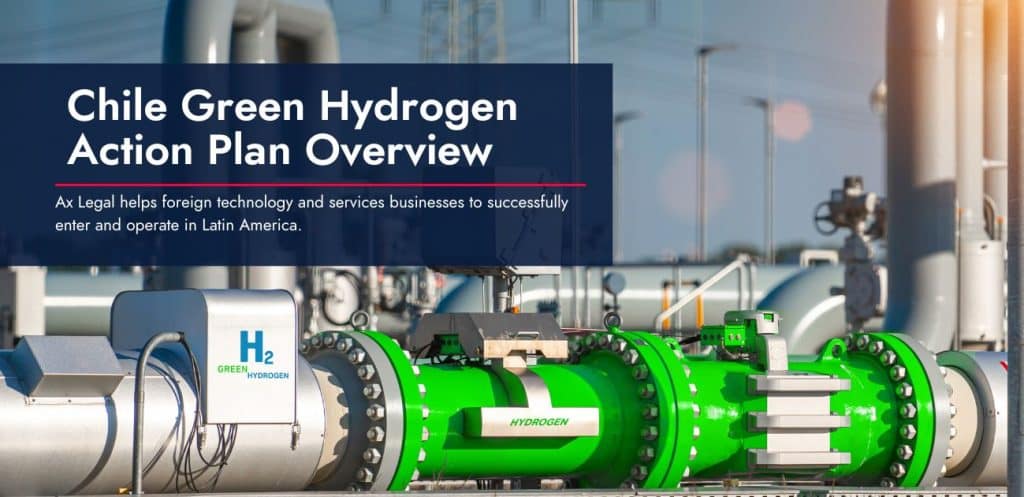
Third, renewable energy. This may be the most compelling area of all. Chile is a prime candidate for EU energy partnership: it has substantial potential for cheap renewable electricity generation from wind and solar, and already has the ambition to become the world’s lowest-cost green hydrogen producer by 2030 and one of the three largest hydrogen exporters by 2040. The EU and Chile have already established strong collaboration on green hydrogen through the Horizon Europe flagship hydrogen initiative, and through Mission Innovation, Chile has served as co-leader of the Clean Hydrogen Mission.
Kast, a pragmatist on economics, would be leaving money on the table if he walked away from these partnerships.
The Road Ahead
Kast will need to build coalitions and manage competing pressures. Chile owes much of its social and economic development to its deep commitment to international institutions and its large network of free trade and investment protection agreements — a strategic policy that all administrations have maintained since the return of democracy in 1990.
Chile has now elected a president on the right who fits in with several other presidents around the hemisphere — alongside Argentina’s Javier Milei, Bolivia’s Rodrigo Paz, and Ecuador’s Daniel Noboa. This regional alignment could actually strengthen, rather than weaken, EU-LAC cooperation: a bloc of pro-market, open-economy governments may prove more willing to streamline the regulatory environment that makes cross-border innovation flourish.
For ENRICH in LAC, Chile under Kast represents an opportunity, not a threat. A government that believes in reducing bureaucracy, welcoming foreign investment, and growing the private sector will find in this European network a partner that speaks exactly the same language.
The bridges between Santiago and Brussels were built carefully over two decades. If Kast plays his hand wisely, the next chapter could be the most productive yet.
Note: This article incorporates analysis of Kast’s known policy positions relative to ENRICH in LAC’s framework. Any future policy decisions by his administration regarding the initiative remain speculative pending official announcements.