


The Smallest Country with the Boldest Tech Bet

How Guyana Is Spending Its Oil Windfall on Innovation
A nation of fewer than a million people is quietly positioning itself as South America’s AI capital. Here’s how it’s doing it — and what its neighbor next door could learn.
eyesonguyana
In 2019, Guyana struck oil. Not a little oil — an extraordinary gusher of offshore reserves that would eventually rank among the largest per-capita discoveries in the world. With a population of roughly 800,000, Guyana has dramatically increased its per-capita wealth since becoming an oil-producing nation, registering a GDP growth rate of 43.6 percent in 2024 — one of the fastest-growing economies on earth. The question was always what would happen next: would the country join the long, unhappy list of resource-cursed nations, or would it dare to be different?
The answer, increasingly, looks like the latter. Rather than letting petrodollars pool in government accounts or vanish into infrastructure vanity projects, Guyana has been making a calculated, aggressive bet on technology and innovation as the engine of its long-term future. The results are beginning to look genuinely remarkable.
The Framework: Turning Oil Revenue into a Digital Economy
The architecture of Guyana’s innovation strategy rests on a few interlocking pillars. The first is a sovereign wealth fund designed to avoid the boom-and-bust trap. Guyana established the Natural Resource Fund in 2019 to manage oil revenues, which received $2.57 billion in 2024 alone and is projected to exceed $3.2 billion by the end of 2025.
But accumulating money is the easy part. Directing it wisely is harder. Guyana intends to diversify its economy through investments in agriculture, energy, manufacturing, and information and communication technology — and to that end, the Government of Guyana offers incentives for investment across those sectors, particularly in outlying regions, through the Guyana Office for Investment, or GO-Invest.
Related Posts:








The investment agency has been active and surprisingly nimble. Through digitization and training, the country has reduced the time needed to register a business from three weeks to less than one week. That speed matters: foreign tech companies deciding where to plant a flag rarely reward sluggish bureaucracies.
Underpinning all of this is an aggressive digital infrastructure push. As of 2024, Guyana’s internet penetration rate stands at approximately 52%, with ongoing investments projected to bring that figure to 75% by 2030. A forthcoming “ICT Masterplan 2030” is expected to anchor strategic priorities including expanded broadband, improved e-government services, and a culture of innovation through public-private partnerships. On the human capital side, the University of Guyana has added new programs in petroleum engineering, data science, and AI, preparing students for careers in both the oil sector and the wider digital economy.
Investment #1: The Cerebras Deal — A Supercomputer in the Rainforest

Nothing captures Guyana’s ambition quite like the agreement it signed with Silicon Valley in November 2025. The Government of Guyana and Cerebras Systems signed a landmark MOU to build and operate a state-of-the-art AI data center of up to 100MW in Wales, Guyana — a transformative initiative marking a new chapter in Guyana’s journey to become an AI-first nation and the regional leader in digital innovation.
The scale is breathtaking for a country of this size. According to Cerebras’ senior vice president for product and strategy, the facility is designed to serve not only Guyana but neighboring countries as well, with revenue shared between Cerebras and the government. Construction is expected to begin in the fourth quarter of 2026, with operations slated for early 2027.
The strategic positioning of the data center is itself a piece of engineering elegance. The facility will be located near Guyana’s Gas-to-Energy plant, effectively using domestic energy resources to power cutting-edge AI infrastructure. Oil funds the energy; energy powers the supercomputers; the supercomputers attract global AI clients. The feedback loop is deliberate.

President Dr. Mohamed Irfaan Ali described the partnership in sweeping terms: “Guyana is building a future where Guyanese talent powers global innovation, where its infrastructure supports frontier technologies, and where the nation leads the region in digital transformation.”
Cerebras CEO Andrew Feldman framed it as the first deployment under the company’s “Cerebras for Nations” initiative — a program explicitly designed to help governments build sovereign AI infrastructure. Guyana, it seems, was first in line.
Investment #2: The BPO Boom — English as a Competitive Advantage
While the Cerebras deal grabs headlines, a quieter tech sector has been growing steadily for years: business process outsourcing, or BPO. Guyana holds a card that no other country in South America possesses — it is the continent’s only English-speaking nation, with a highly literate workforce and a time zone aligned with North American business hours.
The government has set a goal to create 25,000 ICT-related jobs within five years, particularly through new call centers and ICT enterprises, and offers investors VAT exemptions on cell phones, data, and ICT equipment, along with full waivers on import duties for qualifying machinery.
GO-Invest has been hands-on in facilitating these investments. The agency announced the opening of V-Chart Services’ third call center in Enmore — a project it facilitated through tax concessions and community engagement — which generated over 300 jobs and highlighted the impact of BPO investment on Guyana’s economic growth.
The sector is seen not just as an employment generator but as a digital literacy engine — a way to bring broadband skills and tech-adjacent experience to communities far from Georgetown, building the human infrastructure that more sophisticated innovation will eventually require.
Investment #3: Tech Parks, AI Incentives, and Regional Hubs
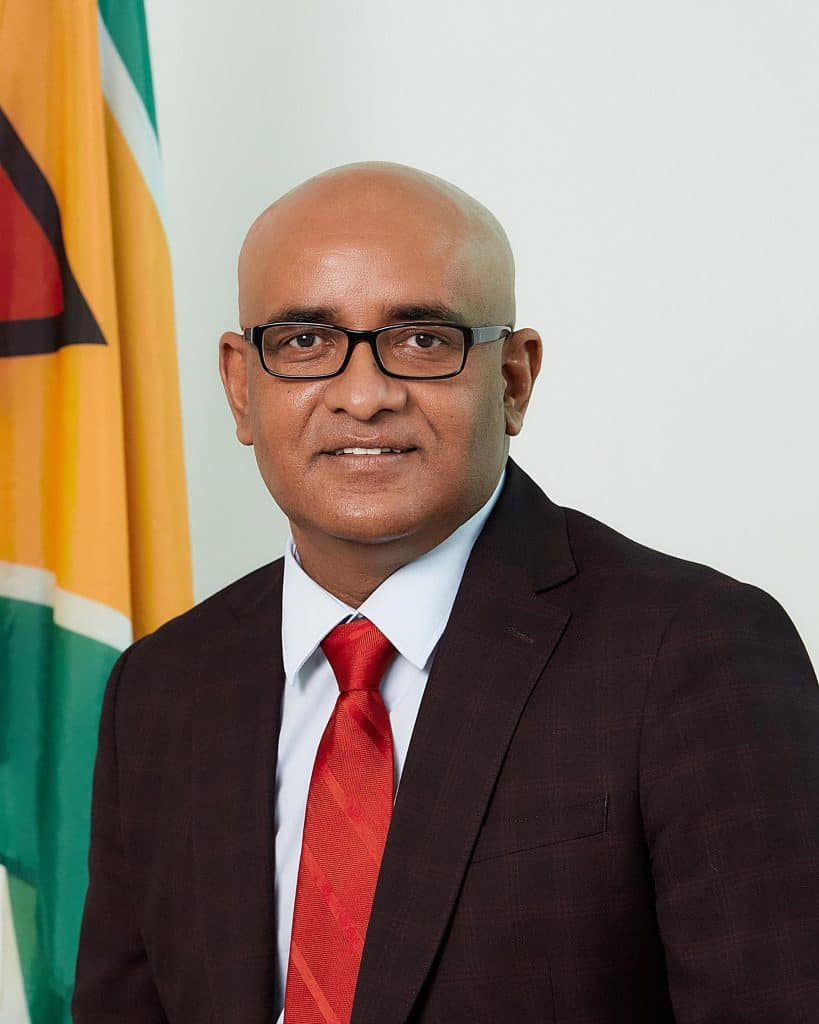
Beyond individual deals, the government has been articulating a vision of distributed innovation. Vice President Dr. Bharrat Jagdeo outlined the national push directly: “We will train more people in those sectors. We will open up tech parks. We’ll create incentives for AI companies to operate here because that’s the future.” He also disclosed that a number of AI companies were actively eyeing opportunities in Guyana.
The vision extends beyond Georgetown. The plan includes establishing a technical and innovation hub in each region of the country to work with farmers, fishermen, and small businesses, providing training, product development support, and pathways to growth. This is a notable ambition: rather than concentrating the tech ecosystem in the capital and hoping benefits trickle outward, the government is trying to seed innovation at the regional level from the start.

President Ali has also outlined a citizen-centric digital transformation agenda built around an online portal consolidating key public services and a national e-wallet — framing digitization as fundamental to the country’s modernization and not merely a business-sector concern.
The financial sector is getting in on the act as well. Local banks and fintech startups are incorporating AI for fraud detection and customer service, while the broader tech wave is generating buzz about creating a technology park or incubator to nurture startups, with success stories already emerging from local firms that developed specialized software for logistics and workforce management in the oil supply chain.
A Final Thought: What Suriname Could Learn from Its Neighbor
Cross the eastern border from Guyana and the contrast becomes instructive. Suriname shares much with its neighbor: a resource-rich terrain, a small population, colonial history, and the imminent promise of offshore oil wealth. Yet the two countries have taken markedly different paths.

Businesses in Suriname have long faced difficulties growing and innovating, with a lack of administrative principles creating uncertainty for entrepreneurs and an absent legal framework on intellectual property rights acting as a persistent barrier to innovation. Suriname’s stock market has just twelve registered companies and meets only twice a month — without even an electronic exchange.
Suriname’s minister of economic affairs has acknowledged the gap candidly. With a population of around 650,000 and only 9% university graduates, and after a decade in which government subsidies fostered a dependency culture, the challenge now is re-educating and motivating the population for a tech-driven economy — a task the minister described as “no small feat.”
There are encouraging signs. Suriname’s National Digital Strategy 2023-2030 outlines a framework around six priorities including strengthening digital infrastructure, delivering digital identity, and improving access to government services. The Suriname Investment and Trade Agency has set a goal to create technology parks by 2030 focused on software development, fintech, and digital marketing, and is positioning the country’s unique multilingual workforce — Dutch and English speakers in a region where neither is common — as a competitive advantage for BPO into both European and North American markets.
The strategy is sensible. But Guyana’s lesson is not really about strategy — it’s about sequencing and speed. Georgetown did not wait for every regulatory framework to be perfect before inviting Cerebras to build a supercomputer on its soil. It moved, loudly and decisively, and the signal that sent to other investors was worth more than any investment policy document.
Suriname has the language skills, the natural resources, and now, finally, the macroeconomic stability to compete for the same tier of high-tech investment. Moody’s upgraded Suriname’s sovereign credit rating in October 2024, largely attributing the improvement to the positive economic outlook from oil development and newly gained macroeconomic stability. The foundation is there.
What Suriname needs next is Guyana’s willingness to be bold in public — to make the kind of headline-grabbing, narrative-setting moves that tell the world: we are open, we are serious, and we are building something worth watching. In the race to become the digital hub of the Guianas, the starting gun has already fired. Guyana heard it first.