


Silicon Valley Comes to the Jungle

How Cerebras Is Betting Big on Guyana’s AI Future
eyesonguyana
There is a small country on the northeastern shoulder of South America that most people couldn’t locate on a map a decade ago. Today, Guyana is one of the fastest-growing economies on earth, its fortunes transformed by a gusher of offshore oil wealth that arrived almost overnight. Now, a Silicon Valley chip startup is betting that Guyana’s next transformation will be even more dramatic — and that it will be powered not by petroleum, but by artificial intelligence.
The Deal That Turned Heads
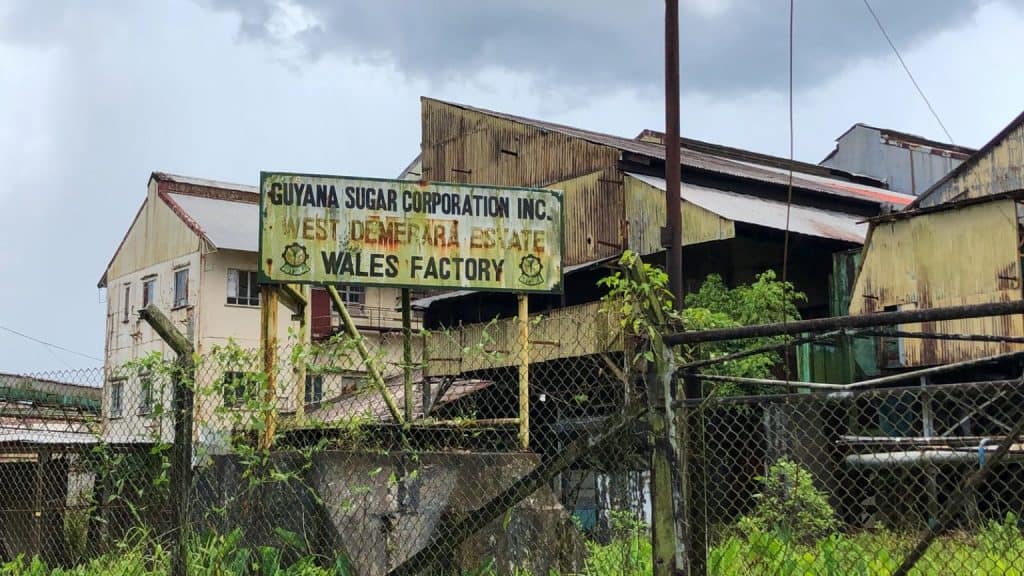
In November 2025, the Government of the Co-operative Republic of Guyana and Cerebras Systems signed a landmark Memorandum of Understanding to build and operate a state-of-the-art AI data center of up to 100 megawatts in Wales, Guyana — a bold step toward shaping the future of technology in South America and the Caribbean.
Cerebras, headquartered in Sunnyvale, California, is no ordinary tech company. Its flagship technology, the Wafer Scale Engine, is the world’s largest and fastest AI processor — 56 times larger than the largest GPU — using a fraction of the power per unit of compute while delivering inference and training dramatically faster than competitors. When a company like that decides to plant its flag in a country that, until recently, had no data centers at all, people pay attention.
According to Data Center Map and Baxtel, Guyana contained no data centers at all before this announcement. The Wales facility will change that in a significant way — and the financial structure of the deal ensures that the benefit isn’t one-sided. Cerebras and the government will share revenue from the data center, which is scheduled to break ground in the fourth quarter of next year and be operational in early 2027.
Related Posts:






A Vision Bigger Than a Building

President Dr. Mohamed Irfaan Ali did not mince words when the MOU was signed. “This partnership is more than an AI data center; it’s a declaration of Guyana’s ambition,” he said. “Guyana is building a future where Guyanese talent powers global innovation, where its infrastructure supports frontier technologies, and where the nation leads the region in digital transformation.”
That ambition is written into the deal’s architecture. As the flagship of Cerebras’ “Cerebras for Nations” initiative, Guyana will lead the Caribbean in sovereign AI capability — backed by data-sovereignty legislation, revenue-sharing models, and talent-building programs through universities, training centers, and startup incubators.

The location itself was chosen strategically. The facility will reportedly be located near a gas-to-energy plant, which will power the facility. Guyana’s energy boom, the same one that drove its extraordinary GDP growth, will now fuel its digital ambitions as well — turning a hydrocarbon windfall into computational horsepower.
The Wales Data Center will anchor the broader vision for digital prosperity, including education hubs, startup incubators, and advanced research centers. The project has also already sparked interest from other major players. The announcement attracted interest from global players in AI, cloud computing, and digital infrastructure, signaling that Guyana’s emerging technology sector may soon become a magnet for international investment.
Reshaping a Nation
The implications for Guyana’s future reach far beyond server racks and fiber cables. Cerebras’ CS-3 supercomputers will enable world-class AI research and enterprise applications while creating jobs, advancing education, and fueling national innovation in sectors like healthcare, agriculture, and biodiversity.
The government has been quietly building toward this moment for some time. Vice President Dr. Bharrat Jagdeo laid out the vision plainly: “We will train more people in those sectors. We will open up tech parks. We’ll create incentives for AI companies to operate here because that’s the future.”
This is the kind of economic diversification that developing nations dream about but rarely achieve. Oil wealth notoriously tends to concentrate in the hands of a few and disappear when the reserves run dry. AI infrastructure, by contrast, compounds. A data center attracts researchers and startups. Researchers and startups attract more investment. More investment builds universities and training programs. Cerebras will invest in upskilling Guyanese talent, launching training programs, research initiatives, sponsoring partnerships with international universities, and internship opportunities to ensure that the benefits of the partnership are felt across every community.
Guyana’s geographic location offers a unique advantage as a bridge between South America and the Caribbean, reinforced by membership in CARICOM and strong partnerships with major nations like the United States. A 100-megawatt AI facility positioned at that crossroads doesn’t just serve Guyana — it will have the capacity to serve nearby nations across the region.
The English Advantage Nobody Talks About
There is one more ingredient in Guyana’s formula that rarely makes the headlines but quietly underpins everything else: language.
Guyana is the only English-speaking country in South America, a legacy of British colonialism that has become an unexpected competitive asset in the global tech economy. When Cerebras engineers fly in from Sunnyvale, there are no translators needed. When Guyanese developers apply for internships with Silicon Valley firms or enroll in programs with international universities, they do so in the same language those institutions operate in. When startups set up shop in the Wales technology ecosystem and seek clients across North America or Europe, the pitch meetings happen without friction.

Guyana’s digital economy is poised for significant growth, and as the country works to build its ICT talent pipeline, there is already a strong demand for education and training services. In a world where almost all of the most advanced AI research, documentation, and tooling is produced in English, Guyana’s population carries a head start that countries like Brazil or Colombia — with far larger economies — simply don’t have by default. A Guyanese student learning to fine-tune a large language model isn’t fighting through translation barriers. A Guyanese engineer reading Cerebras’ technical documentation is reading it as written.
It’s a subtle thing, easy to overlook. But in the race to build an AI-first nation, being able to speak the language of Silicon Valley — literally — is not nothing. It may, in fact, be one of Guyana’s most underrated trump cards as it works to write the most unexpected chapter of its already remarkable story.