


Beyond the Borderline

Why Venezuela’s Rise is Guyana’s Ultimate Security Win—and Toughest Economic Test
eyesonguyana
The removal of the previous regime in Caracas has done more than just shift the internal politics of Venezuela; it has sent shockwaves across the border into Georgetown. For the Republic of Guyana, the “Black Gold” revolution in Venezuela is a double-edged sword that could define the next decade of Caribbean history.
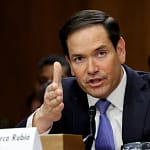
As Secretary of State Marco Rubio makes it clear that Venezuela will be self-funded through its own resources, Guyana finds itself in a strange paradox: The neighbor that once threatened its existence is about to become its most formidable economic rival.
The Security Dividend: Goodbye, War Drums
The most immediate “Pro” for Guyana is the evaporation of the Essequibo threat. For years, the Maduro regime used the 160,000 km² disputed territory as a nationalist distraction, moving troops to the border and issuing maps that wiped Guyana off the face of the earth.
With the U.S.-led transition and Rubio’s firm stance on territorial integrity, the threat of an “annexation by tank” has effectively vanished. Guyana can finally redirect its national budget from emergency defense and “border alerts” into the very thing it needs most: domestic infrastructure.
Related Posts:







“Guyana is back on the map as a ‘safe’ jurisdiction,” says one regional analyst. “The geopolitical risk premium that was scaring away secondary investors has been slashed overnight.”
The Economic Duel: The Battle for “Exxon’s Attention”
While the guns have been silenced, the “Oil War” is just beginning. Guyana has enjoyed a spectacular run as the world’s fastest-growing economy, largely because it was the only stable “frontier” for Western oil majors. Now, the math is changing.
The Comparison: Sweet vs. Heavy
| Feature | Guyana (Stabroek Block) | Venezuela (Orinoco Belt) |
| Crude Type | Light, Sweet (Easy to refine) | Extra-Heavy, Sour (Hard to refine) |
| Cost to Produce | Approx. $25–$35 per barrel | Approx. $45–$60 per barrel (due to infrastructure decay) |
| Reserves | ~11 Billion Barrels | ~300 Billion Barrels |
| Infrastructure | Brand new, state-of-the-art | Dilapidated, requires $100B+ to fix |
The “Con” for Guyana is the Sucking Sound of Capital. If Venezuela begins to offer highly favorable, “self-funded” contracts to companies like Chevron, ExxonMobil, and TotalEnergies, Guyana may find it harder to negotiate the same aggressive terms it once held. The regional “monopoly” on Western oil investment has ended.
The Price Pressure: A Race to the Bottom?
Rubio’s statement that Venezuelan oil will now be sold at market rates—ending the “Russian/Chinese discount”—is good for price stability, but bad for those who fear a glut. If Venezuela successfully ramps up to its former 3-million-barrel-per-day glory, global Brent prices could face downward pressure.
For Guyana, which is banking on high margins to fund its “Low Carbon Development Strategy,” a sustained price drop to $50 or $60 per barrel could slow down the pace of its sovereign wealth fund accumulation.
The Verdict: A New Regional Dynamic
The “Way Back to Glory” for Venezuela doesn’t have to be Guyana’s downfall. In fact, a prosperous Venezuela means a stabilized northern South America, which could lead to:
- Cross-border energy grids and shared pipelines.
- A massive new market for Guyanese agricultural exports.
- Regional stability that attracts “non-oil” sectors like tech and tourism.
As Secretary Rubio noted, the goal is “prosperity,” and for the first time in a century, that prosperity might be shared rather than stolen. Guyana is no longer an underdog fighting for survival; it is now a seasoned player in a high-stakes game with a very wealthy neighbor.
This video provides the essential context of Secretary Rubio’s firm stance on protecting Guyana’s territorial integrity against Venezuelan claims, which is a cornerstone of the current regional security shift.