


Why East Timor Turned to Norway

And Namibia Now Looks to Guyana
eyesonsuriname
Amsterdam, July 14th 2025– When East Timor became independent in 2002, it faced a major challenge: how to manage its vast offshore oil and gas reserves without falling into the familiar traps of corruption, waste, and inequality. The country’s leaders made an unusual move. Instead of turning to former colonial powers or Western corporations, they sought help from Norway.
The Norwegian Model as a Guide
Since the 1970s, Norway had built a strong reputation for managing oil revenues responsibly. The country created the Government Pension Fund Global, also known as the oil fund, which manages petroleum revenues transparently and with future generations in mind. Norway also built strong institutions, invested in education and health, and maintained strict oversight and public accountability.
In 2003, East Timor partnered with NORAD, the Norwegian Agency for Development Cooperation, to launch the Oil for Development program. The goal: to support East Timor in building institutions, designing policies, and managing revenues so that oil would serve the people—not elites.
This cooperation helped East Timor create a sovereign oil fund, legally anchored in transparency and accountability. While the country still faces poverty and political challenges, its management of oil revenues remains internationally praised.
Related Posts:








What About Namibia?
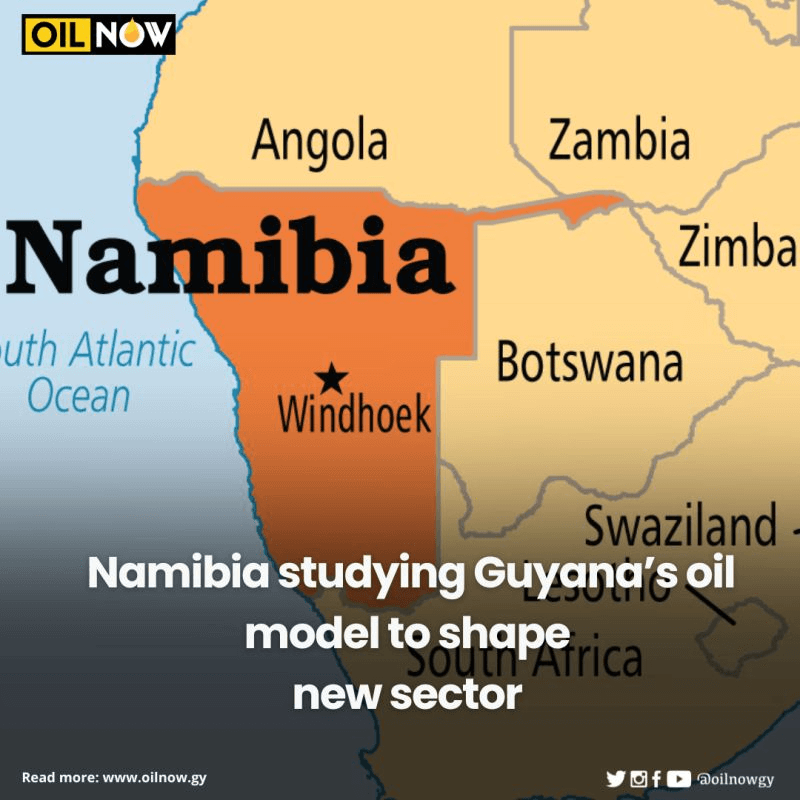
Namibia, which recently discovered major offshore oil and gas fields, has taken a different route. Rather than turning to Norway, Namibia is now closely watching Guyana, a newcomer that struck oil in 2015 and has become one of the world’s fastest-growing economies.

Guyana chose a pragmatic and fast-track development model, partnering with international oil giants like ExxonMobil. This has led to massive inflows of investment, job creation, and infrastructure — but also raised concerns over environmental risk, inequality, and national control.
Namibia is attracted to the pace and scale of Guyana’s development. What Norway built in 50 years, Guyana is attempting in 10 — a compelling prospect for countries eager to see quick results.
Two Paths, Two Visions
The choice between Norway and Guyana reflects a broader dilemma: long-term sustainable management versus rapid extraction-led growth. East Timor chose a cautious path focused on governance and transparency. Namibia appears drawn to immediate economic gains and global relevance.
Each strategy has merits and trade-offs. Norway’s model offers stability but demands strong institutions and patience. Guyana’s model promises speed and investment, but risks social and ecological imbalance.
Conclusion
East Timor’s decision to work with NORAD was a commitment to good governance. Namibia’s interest in Guyana reflects a new global trend: less reliance on Western aid, and more on pragmatic, south-south models of cooperation.
Neither model is inherently better. The real question is: which path fits a country’s values, capacities, and long-term goals best?
As a Timorese policymaker once said: “We looked to Norway because they knew oil can be a curse — unless you master it with vision.”
We spoke to Antonio Romero, CEO of Petrolifting. And he Weighs In
According to Antonio Romero, CEO of the Colombian-Venezuelan energy firm Petrolifting, it is no surprise that countries like Namibia are looking to Guyana rather than Norway. In a recent industry panel, Romero stated:
“The Norwegian model is technically brilliant, but politically and institutionally difficult to replicate in most emerging economies. Guyana’s strength is not perfection — it’s speed. And in this market, speed is gold.”
While acknowledging Norway’s success, Romero argues that many African and Latin American nations lack the stable institutions, social cohesion, or patience needed to implement a Norwegian-style system effectively.
Instead, with urgent needs in areas like jobs, infrastructure, and growth, Guyana’s fast-track approach — built on offshore production, public-private partnerships, and immediate revenues — becomes far more attractive.
Still, Romero offers a warning:
“If you only copy Guyana’s explosive growth without addressing their governance challenges, you’re copying the surface. What we need is a hybrid model: perhaps Guyanese speed with Norwegian discipline.”
Romero thus advocates not for blind imitation, but for a contextual strategy, one adapted to each country’s governance, capacity, and development urgency.