


Trump’s Latin Gamble: Petro Today, Lula Tomorrow?

eyesonguyana
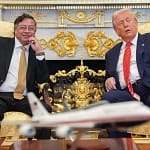
Donald Trump is staging what he calls a “new offensive” against South America’s drug trade, welcoming Colombia’s President Gustavo Petro to Washington with the promise of tougher cooperation. But beneath the handshakes and photo ops lies a clash of visions—and a looming question: can Trump really bend Latin America to his will?
Petro in the Hot Seat
At a press conference ahead of the meeting, Trump declared: “Petro will be much more cooperative now that Maduro is out of the picture.” The remark was vintage Trump—part boast, part threat. Yet Petro has long resisted Washington’s militarized approach, preferring crop substitution and rural investment over helicopters and raids.
The odds of Trump “containing” drug trafficking are slim. Cocaine production in Colombia hit record highs in 2025, and traffickers have proven nimble, rerouting shipments through Venezuela, Brazil, and even West Africa. As one analyst quipped, “Trying to stop cocaine at the source is like trying to stop water from flowing downhill.”
Trump may secure symbolic wins—joint patrols, flashy seizures—but the structural drivers of the trade remain untouched.
Related Posts:





The Monroe Doctrine Redux
Trump’s rhetoric signals a revival of the old Monroe Doctrine: Washington as the hemispheric sheriff. He has threatened sanctions against “narco-states” and hinted at military strikes on traffickers. For Latin American leaders, this is déjà vu—a return to the era when U.S. policy was dictated from the Oval Office, with little regard for sovereignty.
Critics warn that Trump’s approach risks alienating allies. Petro himself has said: “Colombia will not be a pawn in anyone’s war. We need peace, not more soldiers in our fields.”
Brazil: Lula in the Crosshairs?
The next act in Trump’s Latin drama is already scheduled. In March, Brazil’s President Luiz Inácio Lula da Silva will visit Washington. Brazil is a major transit hub for cocaine bound for Europe and Africa, and Trump has hinted that Lula must “get serious” about enforcement.
Will Lula be the next target? Possibly. Trump thrives on confrontation, and Brazil’s leftist government is an easy foil. Lula, however, is no novice. He will likely push back, framing Brazil as a sovereign partner rather than a subordinate. Expect fireworks.
Final Word
Trump’s meeting with Petro is less about solving drug trafficking than about projecting power. The drug trade is too entrenched, too global, to be “contained” by one summit or one administration. But Trump’s strategy is clear: pressure, spectacle, and dominance.
Today it’s Petro. Tomorrow, it may well be Lula. The real question is whether Latin America will bend—or whether leaders like Petro and Lula will remind Trump that sovereignty is not for sale.