


The Americas Bloc

Why a Guyana-Venezuela Alliance is the World’s Next Energy Superpower
eyesonguyana
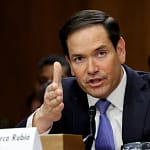
The transition in Caracas hasn’t just silenced the drums of war in the Essequibo; it has opened the door to a “Power Couple” dynamic that could rewrite the global energy map. If Secretary Marco Rubio’s vision of a self-funded Venezuela comes to pass, the smartest move for the region isn’t a rivalry—it’s a Caribbean Energy Alliance.
Here is how a partnership between the “Old Titan” (Venezuela) and the “New Star” (Guyana) could create a Western Hemisphere powerhouse to rival OPEC.
For decades, the border between Venezuela and Guyana was a flashpoint of “maps and menaces.” But in the reality of 2026, the chemistry of their oil is doing what diplomacy couldn’t: forcing them together.
1. The “Perfect Blend” Strategy
As we’ve discussed, Venezuela’s oil is “extra-heavy,” meaning it has the consistency of cold molasses. To move it, Venezuela has historically had to buy expensive “diluents” (thinning agents) from places as far away as Iran or Russia.
Enter Guyana.
Related Posts:







Guyana produces some of the lightest, “sweetest” crude on the planet. By piped or shipped blending, Guyana’s light oil can act as a natural, local diluent for Venezuela’s heavy sludge.
- The Result: Venezuela slashes its production costs by $10–$15 per barrel.
- The Payoff: Guyana gains a massive, guaranteed local buyer for its crude, insulating it from the price swings of the volatile Asian and European markets.
2. A “Western OPEC” (Without the Politics)
If you combine the proven reserves of Venezuela (~300 billion barrels) with the rapid-fire production of Guyana (~1.2 million bpd by 2027), you aren’t just looking at two neighbors—you’re looking at a continental wall of energy.
The Geopolitical Math: A coordinated “Americas Bloc” (including the U.S. shale and Suriname’s new finds) would control nearly 30% of the world’s proven reserves. This would effectively end the era where Middle Eastern production cuts can single-handedly dictate the price of a gallon of gas in Miami or São Paulo.
3. Infrastructure: The “Golden Pipeline”
Instead of both countries building redundant refineries and ports, an alliance allows for shared infrastructure:
- Refining Synergy: Guyana doesn’t have a major refinery yet. Venezuela has several (though they currently need the “Rubio-led” repairs). It is far cheaper to barge Guyanese oil to the Paraguaná Refinery Complex than to build a new one from scratch in Georgetown.
- Security Savings: With the Essequibo dispute shelved, the billions both nations would have spent on “border defense” can be redirected into a joint Caribbean Coast Guard to protect offshore rigs from piracy and “gray zone” interference.
The Challenges: Can They Play Nice?
| The “Pro” | The “Con” |
| Market Stability: Massive regional supply keeps prices predictable. | Legacy of Distrust: Decades of threats won’t vanish overnight. |
| Cost Efficiency: Shared pipelines and local diluents. | Investment Lag: Venezuela needs $100B to be a “functional” partner. |
| Global Leverage: A seat at the table with the world’s biggest powers. | U.S. Dominance: Critics may see it as a “U.S.-led energy colony.” |
The Bottom Line
Secretary Rubio’s declaration that Venezuela will be “self-funded” assumes that the country can sell its oil efficiently. There is no more efficient way to do that than by leaning on the “Sweet” success of its neighbor. If these two nations can trade their “history of hate” for a “future of fuel,” the Caribbean won’t just be a tourist destination—it will be the engine room of the world.